Back to Hamilton: An American Musical (Original Broadway Cast Recording)
After Washington retires, Hamilton’s political fortunes start to fade. He gets into a fight with President John Adams, despite being in the same political party, and that’s scandal enough. But then it gets worse in the next song …
This introduction follows the same template as those of “A Winter’s Ball”, “Guns and Ships” and “Your Obedient Servant”, as well as “Alexander Hamilton” and “What’d I Miss?” at the opening of each act.
These passages, all delivered by Burr with a tone of pointed incredulity, effectively function as a dramatic prologue to different sections of the musical. Here, Burr’s narration continues through the entire song, essentially giving a relatively concise summary of the political situation so that the action thereafter can focus on Hamilton himself.
In response to Hamilton’s extended diatribe against Adams, fellow Federalist Noah Webster wrote:
Will not Federal men, as well as anti-Federal, believe that your ambition, pride, and overbearing temper have destined you to be the evil genius of this country?

“Displaying great diversity or variety: versatile,” according to Merriam-Webster Dictionary. From “Proteus,” a minor sea god from Greek mythology known for his shapeshifting ability. The connection here is that Hamilton is taking on a wide variety of roles in the new government, not to mention the maritime reference to the Coast Guard immediately after. The maritime reference here is also likely a jab at Hamilton’s immigrant status / island upbringing.
Furthermore, having Burr call Hamilton “protean” adds an extra layer of irony because Proteus was constantly changing form and shape in order to slip out of the hands of people who wanted to ask him questions. Sound like Aaron “ask him a question: it glances off, he obfuscates, he dances” Burr to anyone? It is actually Burr who gets described as “protean” in Chernow’s biography of Hamilton.
This may also be a reference to William Shakespeare’s The Two Gentlemen of Verona. In that play, the character Proteus goes off to see the world, leaving his faithful lover behind, and immediately falls in love with another woman. It’s hard to believe this isn’t an intentional parallel to Hamilton’s affair with Maria Reynolds, especially since the next three songs are focused heavily on the affair.
LMM must’ve had a lot of fun with this line.
The Coast Guard was created in 1790 by Hamilton. Then known as the “Revenue Marine,” its job was to collect taxes at U.S. seaports.
The thirteenth oldest widely-circulated newspaper in the United States, the New York Post was founded in 1801 and was known as the New York Evening Post. Chronologically, this song is placed before the creation of the newspaper conveying how the musical is also told from Burr’s perspective looking back on Hamilton’s life.
The paper was established by Hamilton and other Federalists dismayed at the rise of Thomas Jefferson and the Democratic-Republicans. Unlike the gossip-laden rag of today, it was actually a newspaper of note at the time.
It was acquired by Henry Villard in 1881 and would be sold numerous times during the 20th century.
In 1976, Rupert Murdoch and News Corp acquired the Post for $30 million.
Rupert Murdoch was a major component in the newspaper’s transition from legitimate newspaper to attention-grabbing tabloid.
Spoiler alert! Burr is making a reference to Hamilton’s alleged abuse of his power as Secretary of the Treasury to speculate on back wages due to veterans, and the infamous Reynolds Pamphlet that he published in an attempt to clear his name. He did (mostly) dispel the rumors of corruption, but people were left thinking he had bad judgment and a real problem keeping it in his pants. His political career was ruined.
But in addition to these actions in the play, Hamilton’s reaction to rebels during the Quasi-War was viewed as an abuse of his power. Pennsylvanians had resisted the imposition of a federal property tax meant to fund the undeclared naval war with France. They were then jailed. But John Fries led an expedition of men to free those who were jailed. Since this was considered treason, Adams declared a state of emergency after this happened. He then up and went to Quincy. Hamilton was in charge of the military at the time, and he got a huge army into Pennsylvania. Hamilton captured 60 men and dragged them back to Philadelphia to be tried. The leaders were convicted of treason, but Adams pardoned the participants, including Fries. Adams later said of Hamilton’s reaction:
Mr. Hamilton’s imagination was always haunted by that hideous monster or phantom, so often called a crisis, and which so often produces imprudent measures.
This is reminiscent to the Cabinet Battles … telling us another storm is brewing.

The low pitched voice here and in a few parts of the song is that of Lin-Manuel Miranda.
https://twitter.com/rsp1661/status/646126233575649280
https://twitter.com/LacketyLac/status/646820202265640960
This emphasis using a low, echoey voice is pretty common in hip-hop, usually for intimidation purposes, as it is used here: to intimidate anyone who might oppose the Adams administration.
The technique used to pitch the voice lower is known as “chopped and screwed”. It produces a warped and distorted sound which is fitting since it is during the Adams administration that Hamilton’s entire world falls apart and his own warped logic of “I can maintain my honor by dismissing these embezzling charges by admitting to a long affair” strips him of any chance of becoming president.
Until 1804, members of the electoral college each cast two votes, with the second-highest vote-getter becoming Vice President. After Burr’s selection as Vice President in 1800, the 12th amendment was passed to reform the process.
Things really did start going downhill for Hamilton after Washington left office. In this video, around 4:20, Chernow discusses how, under Washington’s guidance, Hamilton flourished. But without Washington he was far more self-destructive and rash.
In fact, after Washington passed, Hamilton described his mentor as an “aegis very essential to me,” an “aegis” being a shield and supporter.
A “nice” hat tip to the phrase “No more Mr. Nice Guy” first used in the 50’s. And of course, it was “nice” to have Washington on Hamilton’s side.
See this Dictionary.com blog post for more about “nice” guys.
Alice Cooper did a whole song called “No More Mr. Nice Guy.”
This could be a reference to a lyric from “Brooklyn’s Finest”, by Jay-Z and The Notorious B.I.G.:
Keep rockin', yeah
No more mister nice guy, I twist your shit
This is playing slightly with the timeline. In fact, Hamilton resigned his post in 1795, even before he began to work on revising Washington’s Farewell address. Adams would not be elected until 1796 and inaugurated in 1797.
It may make more sense to read this as a compression and conflation of characters. “Adams fires his Secretary of War James McHenry and his secretary of state Thomas Pickering for being more loyal to Hamilton than to Adams” would have made a really long and over detailed verse, so Pickering and McHenry are subsumed into Hamilton.
Chernow says that this was just one of the insults Adams lobbed at Hamilton:
On one occasion, borrowing a line from Jonathan Swift, [Adams] vilified Hamilton as “the bastard brat of a Scotch pedlar.” At other times, Hamilton became “the Scottish Creolian of Nevis” or the “Creole bastard.” As a foreigner, Adams alleged, Hamilton was devoid of knowledge of the American character or true appreciation of the Revolution’s patriots and “could scarcely acquire the opinions, feelings, or principles of the American people.”
For more of Adams' insults, this Tumblr post collects several good ones.
Here, Jefferson comes across as legitimately bothered by Adams' behavior. This is delivered as less of a traditional hip-hop call-and-response ‘say what,’ and more of an expression of disbelief.
This is born out by the musical composition around this line. There are a couple of places throughout the show where Miranda reflects a character’s surprise by having the music drop out entirely as the character speaks a line (“She’s married to a British officer.” “Oh shit.”). This is one of them. Jefferson may hate Hamilton’s guts, but he’s genuinely surprised that Adams would say that.
This may be because in reality, Jefferson himself had interracial children by his slave, Sally Hemings. Historians estimate that the relationship began when Hemings was just fourteen years old, when Jefferson moved her and his daughters to Paris in 1787. Hemings gave birth to six “creole” (half black/white) “bastards” (children born out of wedlock). Modern investigations have established a consensus that Jefferson was the father of at least one of Hemings' children, and likely all six.
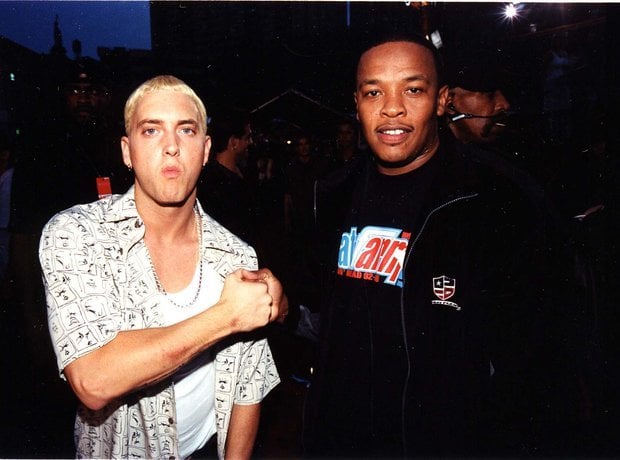
Washington was Hamilton’s co-sign. He was the Lil Wayne to his Drake. He was the Dr. Dre to his Eminem. And he got away with a lot because Washington was his co-sign.
As soon as Washington steps down, it all goes to hell, and he can’t shut up. He writes pamphlets against John Adams while John Adams is still president and is on the same team as him.

This was the “Letter from Alexander Hamilton, Concerning the Public Conduct and Character of John Adams, Esq. President of the United States.” It was about 50 pages of attacks on Adams, and four paragraphs of Hamilton saying, “But, you guys, I’m TOTALLY not saying you shouldn’t vote for Adams!”

Hamilton printed it as a pamphlet in October 1800, intended for private circulation to South Carolina Federalists in order to sabotage Adams' chances, but with the knowledge that those it was sent to would therefore give Adams their second-place vote so Charles Pinckney (another federalist) would be elected president and Adams vice-president. However, Burr got wind of what the pamphlet said, got his hands on a copy and reprinted it for wide release, scuttling the Federalist party’s chances at the election.
The pamphlet angered Adams so much that he wrote a series of letters to the Boston Patriot to defend himself. They were published years after Hamilton’s death.
Miranda wrote a delightfully nasty diss track based on this pamphlet, but it was cut from the show; the next line is all that remains.
That’s a slick reference to the opening number from the 1969 musical 1776. It consists of the exasperated Second Continental Congress exhorting the insistent and self-righteous John Adams to “Sit down, John! For God’s sake, John, sit down!”

Of course, Hamilton himself would not have been present in that scene. However, he would later be in close communication with the Second Congress in his role as Washington’s aide-de-camp. These interactions would strongly influence his thinking on the importance of a strong federal government, particularly one with the ability to collect taxes and fund national initiatives.
This line is also the only remnant of Hamilton’s response from a much longer early draft of this song (well worth checking out), which once consisted of a full diss track aimed at John Adams. A cover of the original version was included on The Hamilton Mixtape.
In the backing of this line, you can hear a whistling similar to the sound of a bomb falling—leading up to Alexander’s F-Bomb!
In the play, as the word is bleeped, Hamilton takes a giant book and drops it. Quite a historically appropriate mic drop. When the book hits the stage, the lights flash, as if the F-bomb were a real bomb.
This is the only bleeped line in the entire cast recording. Here’s the line unbleeped (the contents may surprise you!):
But why is it censored here, and not any other time, you ask?
But why is it funny here, you ask? (Goodness, you’re hard to please.)
Satire! John Adams was hated for his support of the Alien and Sedition Acts, which criminalized criticism against the government. It is only during his ‘administration’ that a part of the play is censored. Everywhere else (Yorktown, Washington On Your Side), words are unbleeped.
This line is also reminiscent of another famous diss…
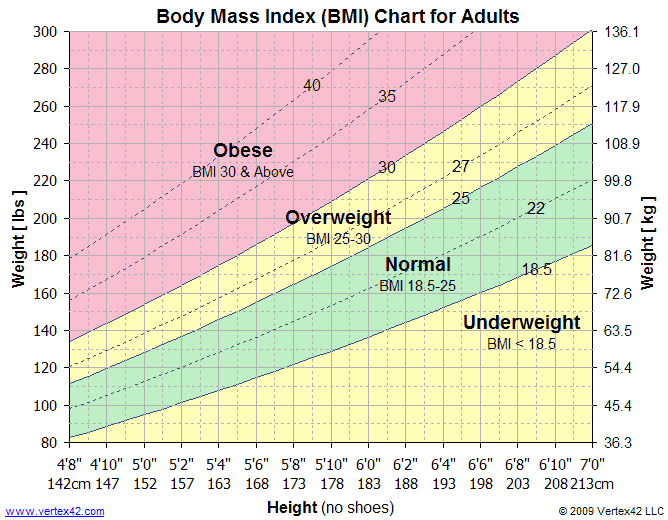
Adams' weight has been estimated at 185 pounds, which at 5'7" puts him firmly overweight and nearly obese according to BMI. He was nicknamed “His Rotundity”.
There are actually two ways that this lyric can be taken.
First, Hamilton has no control of himself anymore, letting loose whatever words come out of his mouth. Hamilton denies this, but we have to consider that while Burr is an enemy at this point, Burr still has a relatively level head.
Second, as Madison will make explicit in the next line, it references that Hamilton is out of office again. He has no control of the happenings in the government.
Other Federalists of the time who would go on to gain some significance after this particular historical moment included Adams’s son, John Quincy Adams and Charles Cotesworth Pinckney. Adams Jr. would eventually win the presidency, albeit with a different party. At the time though, he was Minister to Prussia (and busy gettin' married—he would become the only President who married a first lady born outside the U.S.). Pinckney would later be tapped as the Federalist candidate for VP for the Election of 1800.
In real life, Hamilton wrote a letter (that reads more like an essay) villifying John Adams:
I then adopted an opinion, which all my subsequent experience has confirmed, that he is a man of an imagination sublimated and eccentric; propitious neither to the regular display of sound judgment, nor to steady perseverance in a systematic plan of conduct; and I began to perceive what has been since too manifest, that to this defect are added the unfortunate foibles of a vanity without bounds, and a jealousy capable of discoloring every object.
This comes directly from a letter from Jefferson to Madison:
Hamilton is really a colossus to the antirepublican party. Without numbers, he is a host within himself.
The time period used “host” to describe an army, so Jefferson is literally calling Hamilton a one-man army.
Ignoring Madison’s point that Hamilton was actually inadvertently helping the Democratic-Republican Party, by speaking against the leader of his own Federalist Party, Jefferson decides to silence Hamilton.
This message also occurs in “One Last Time”, when Hamilton says, “I’ll write under a pseudonym, you’ll see what I can do to him—”.
This also references Hamilton’s amazing ability to write which Burr states here. Although Jefferson and Madison feud with Hamilton constantly, they can’t deny his talent with words.
Bonus from Lin (p. 224):
This was the site of one of my best typos of all time. You haven’t lived til you’ve seen Daveed [Diggs] read: ‘As long as he can hold a pen, he’s a treat!’
Jefferson enjoys knowing information ahead of everyone else, as seen in “Cabinet Battle #2” where he says “If you don’t know, now you know, Mr. President.”
It also alludes to the upcoming song, “We Know”.