Back to Hamilton: An American Musical (Original Broadway Cast Recording)
In this song, Washington tells Hamilton what the show he’s starring in is all about. During this scene, Washington hands Hamilton a sword, a symbol of his promotion to his command. The song ends with a mutual salute.
Sure, this song is a minute and a half long, but here’s a seven minute talk with Ron Chernow and MountVernon.org about the relationship between Washington and Hamilton:
He just can’t help bringing up Hamilton either, see 1:33:
Have you seen the show yet? This is actually very central to the show because Lin-Manuel Miranda asked me “Would Washington have seen Hamilton as a younger version of himself?” and I said, “Yes, their personalities were so unlike, but there was something about their situations that would have seemed familiar to Washington.”
In the Off-Broadway version of the song, Washington’s lyrics were slightly different:
I was younger than you are now
The year was 1754
When I was given my first command
I triggered the French and Indian War
On May 28, 1754, George Washington, along with the first militia, had trained some Native Americans and attacked a party of French soldiers near what is today Uniontown, PA. They killed ten French soldiers, including one high-ranking officer. This “battle” (though it was more like a slaughter), became known as the Battle of Jumonville Glen, with Washington being hailed as a hero.
However, the French soon retaliated. When the attack came, on July 3, 1754, Washington made a terrible mistake in choosing “Fort Necessity” to make his stand. His Native American allies abandoned him, believing it impossible to defend. Chernow writes in Washington: A Life:
By the end of the day, the rain-drenched stockade was a horrific swamp of mangled bodies, lying in blood and rain. The appalling casualty toll—a hundred men dead or wounded—represented a full third of Washington’s soldiers.
His blunder during his first command basically started the French and Indian War. He was so embarrassed by this that he resigned his commission, though he rejoined the army as a volunteer aide.
Still, as the only non-Brit to lead troops into action during the war, this defeat made him a logical military leader when the Revolution came.
Neither Washington nor Hamilton sleep at night. Hamilton will write day and night and Washington lies awake feeling the burden of his responsibility. This signals their similarity—both understand that they are playing a role in history—and how they differ—Washington is contemplative while Hamilton is active.
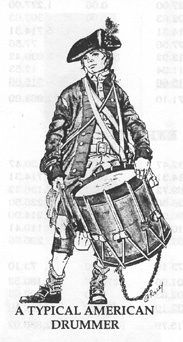
The drum beat which kicks in here evokes the march of time using regimental military drums, invaluable in the period for keeping marching cadence and communicating across distances in an era long before the invention of the radio, the satellite, or the butt dial.

These lines call back to the “whoas” in “My Shot.” This draws a connection between two themes. Hamilton is determined not to throw away his shot—his opportunity to make a difference, to rise above his circumstances, to build a legacy. But, he’s overly confident in his capabilities: “don’t be shocked when your hist'ry book mentions me.” Now, Washington is warning him that history is watching his actions, but he won’t be able to control what it says about him.
This also connects the more literal interpretation of “not throwing away my shot” with “history has its eyes on you.” Whether or not Hamilton threw away his shot in his duel with Burr remains one of the major contentions that historians have about his life, despite Hamilton’s attempts to document his intentions.
These lines call back to the “whoas” in “My Shot.” This draws a connection between two themes. Hamilton is determined not to throw away his shot—his opportunity to make a difference, to rise above his circumstances, to build a legacy. But, he’s overly confident in his capabilities: “don’t be shocked when your hist'ry book mentions me.” Now, Washington is warning him that history is watching his actions, but he won’t be able to control what it says about him.
This also connects the more literal interpretation of “not throwing away my shot” with “history has its eyes on you.” Whether or not Hamilton threw away his shot in his duel with Burr remains one of the major contentions that historians have about his life, despite Hamilton’s attempts to document his intentions.
Washington was well aware that his story would be told and possibly reinterpreted. He wrote, “I walk on untrodden ground. There is scarcely any part of my conduct which may not hereafter be drawn into precedent.” These words are spoken in the voice of Washington in the Hall of Presidents attraction at Disney World.
https://www.youtube.com/watch?v=YJdGHAzkdGs
Washington also wrote, “Many things which appear of little importance in themselves at the beginning may have great and durable consequences from their having been established at the commencement of a new general government.”
These lines call back to the “whoas” in “My Shot.” This draws a connection between two themes. Hamilton is determined not to throw away his shot—his opportunity to make a difference, to rise above his circumstances, to build a legacy. But, he’s overly confident in his capabilities: “don’t be shocked when your hist'ry book mentions me.” Now, Washington is warning him that history is watching his actions, but he won’t be able to control what it says about him.
This also connects the more literal interpretation of “not throwing away my shot” with “history has its eyes on you.” Whether or not Hamilton threw away his shot in his duel with Burr remains one of the major contentions that historians have about his life, despite Hamilton’s attempts to document his intentions.
These lines call back to the “whoas” in “My Shot.” This draws a connection between two themes. Hamilton is determined not to throw away his shot—his opportunity to make a difference, to rise above his circumstances, to build a legacy. But, he’s overly confident in his capabilities: “don’t be shocked when your hist'ry book mentions me.” Now, Washington is warning him that history is watching his actions, but he won’t be able to control what it says about him.
This also connects the more literal interpretation of “not throwing away my shot” with “history has its eyes on you.” Whether or not Hamilton threw away his shot in his duel with Burr remains one of the major contentions that historians have about his life, despite Hamilton’s attempts to document his intentions.
Listeners may be tempted to think this line is a musical reference to “Glory” by John Legend and Common, since those are two artists Miranda says inspired George Washington’s musical style. However, “History Has Its Eyes On You” was written years before “Glory” and Selma’s 2014 release. See Lin’s comment below!
(The song was featured in Selma, a film about the voting rights marches from Selma to Montgomery in 1965, and has become an anthem of the #blacklivesmatter movement.)
Here, Washington corrects the four friends in “The Story of Tonight,” who spoke so confidently of life and death, who would tell their story, and what they would say. As he told Hamilton in “Right Hand Man,” Washington too once harbored fantasies of glory, perhaps through martyrdom. He knows better now: not only was he deprived the glory of dying for his country, but life brought the even more difficult burden of surviving his fallen comrades, and the responsibility of leading a war. Even now, for a renowned general and future president like him, his ultimate legacy remains out of his control, to be determined by whomever comes next; it’s in the hands of history itself.
For Hamilton, the advice is well-timed. As he finally takes command of a regiment, a post he has dreamed of for so long, in pursuit of glory, Washington warns him to forget his ambition: Do not be rash or take risks with your life of those of your men; do not be over-confident in the chance of your success, or think that failure will nevertheless bring glory; tread carefully and with an aim not only to win but to survive. No matter what course you take, your fate and legacy are out of your hands.
This phrase becomes a recurring motif throughout the show and is the basis of Hamilton’s finale, “Who Lives, Who Dies, Who Tells Your Story.”
The admonition that you have no control over “who tells your story” is somewhat ironic coming from Washington, whose very awareness of this fact led him to devote a great deal of time after each of his retirements attempting to frame his own history. In the words of biographer Joseph J. Ellis:
The only certain form of [immortality] was in the memory of succeeding generations … which Washington was determined to influence and, if possible, control as completely as he had controlled the Continental army. … [N]one of [the Founding Fathers] were as earnest in courting posterity as Washington.
The addition of the company to punctuate this line lends more weight to Washington’s pronouncement. It also ensures that the audience will find the words familiar when they are reprised at the start of the final song.
Here, Washington corrects the four friends in “The Story of Tonight,” who spoke so confidently of life and death, who would tell their story, and what they would say. As he told Hamilton in “Right Hand Man,” Washington too once harbored fantasies of glory, perhaps through martyrdom. He knows better now: not only was he deprived the glory of dying for his country, but life brought the even more difficult burden of surviving his fallen comrades, and the responsibility of leading a war. Even now, for a renowned general and future president like him, his ultimate legacy remains out of his control, to be determined by whomever comes next; it’s in the hands of history itself.
For Hamilton, the advice is well-timed. As he finally takes command of a regiment, a post he has dreamed of for so long, in pursuit of glory, Washington warns him to forget his ambition: Do not be rash or take risks with your life of those of your men; do not be over-confident in the chance of your success, or think that failure will nevertheless bring glory; tread carefully and with an aim not only to win but to survive. No matter what course you take, your fate and legacy are out of your hands.
This phrase becomes a recurring motif throughout the show and is the basis of Hamilton’s finale, “Who Lives, Who Dies, Who Tells Your Story.”
The admonition that you have no control over “who tells your story” is somewhat ironic coming from Washington, whose very awareness of this fact led him to devote a great deal of time after each of his retirements attempting to frame his own history. In the words of biographer Joseph J. Ellis:
The only certain form of [immortality] was in the memory of succeeding generations … which Washington was determined to influence and, if possible, control as completely as he had controlled the Continental army. … [N]one of [the Founding Fathers] were as earnest in courting posterity as Washington.
Significant because this is exactly what Hamilton has wanted, for someone to recognize his talents and all the hard work and dedication he’s put forth. Hearing it from Washington was the biggest endorsement possible.
This is a warning from Washington to not act brashly as his actions will affect others' memories of him.
Washington in the afterlife: Remember this?
Hamilton in the afterlife: …Oops.
Yet again, Washington gives off the “Dr. Dre to Eminem” vibe here. Washington sees greatness in Hamilton and knows that with some polish this “shiny piece of coal” will eventually become a diamond. Soon history will be painting pictures of his life. Soon a Puerto Rican dude will be writing musicals about him. He is none other than Alexander Hamilton, and history has its eyes on him.

The band drops out for this last line. The a cappella harmony is used to underline Washington’s wisdom here, as well as the thematic importance of the lyric.
Furthermore, throughout the show the band drops out when a character (usually Hamilton) is going “too far,” so its recurrence here may foreshadow that Hamilton won’t always be able to follow Washington’s advice.