Lin-Manuel Miranda, Anthony Ramos, Daveed Diggs, Okieriete Onaodowan, Leslie Odom, Jr. & Original Broadway Cast of "Hamilton"
After Alexander Hamilton moves to New York, he searches for a thing to be a part of. He soon joins the movement for United States independence where he meets some of the characters in the play and Hamilton’s real friends. It finishes with the call to “Rise Up!” against the British regime.
HAYES: This is what’s fascinating to me. What does it mean, spending a year writing a song?
MIRANDA: It means… Hamilton’s so much smarter than me. This is the song where Hamilton comes into the room and blows everyone away with the strength of his oratory. So every couplet has to be amazing.
This song actually took a year to write because I needed it to sound like some 80s raps.
It had to be super fun and the type of music we grew up to, which are party raps. I wrote Hamilton with very polysyllabic rhymes, like Big Pun or Rakim, which showed that he was literally in a different dimension than everyone else.
I had to prove that his intellect was to be feared in the room.
I am not throwing away my shot ⮐ I am not throwing away my shot
A running refrain throughout the play. Refers to the young and ambitious Hamilton’s shot at glory, but also foreshadows his fateful duel with Burr. The question of whether or not Hamilton chose to throw away his shot in his final duel was a huge controversy at the time, and continues to plague Hamilton’s legacy.
Lyrically, Miranda’s use of the refrain takes inspiration from Eminem’s “Lose Yourself.”
Musically, Hamilton’s repeating “My Shot” motif incorporates a classic snare drum “double bounce” rhythm, reminiscent of a fife and drum snare line that would have been a soldier’s call to arms during Colonial and Revolutionary times. An example.
Also worth noting that Miranda uses less of the My Shot motif in Act II (with the noted exception of the double meaning of throwing away his shot in the Burr duel) as Hamilton had moved past his military glory and had achieved success in life.
The motif of “throwing away one’s shot” may stem from a letter of Hamilton’s written prior to his duel with Burr. In the letter, aptly titled “Statement on Impending Duel with Aaron Burr”, Hamilton writes:
I have resolved, if our interview is conducted in the usual manner, and it pleases God to give me the opportunity, to reserve and throw away my first fire, and I have thoughts even of reserving my second fire—and thus giving a double opportunity to Col Burr to pause and to reflect."
Hey, yo, I'm just like my country ⮐ I'm young, scrappy and hungry
Hamilton was the youngest Founding Father and ended up becoming the first Secretary of the Treasury when he was just 34. Throughout his rise to power, he incessantly called out people and policies, fighting to build what he believed to be the best foundations possible for the nation.
“Hungry” may reference the beginning of Jay-Z’s “My First Song”, which features an interview between the Notorious B.I.G. and Puff Daddy, where Smalls describes the secrets to success – maintaining a sense of urgency (which is the theme of Jay’s song as well). Biggie says:
Gotta try to stay above water y'know. Just stay busy, stay working. Puff told me like, ‘the key to this joint –the key to staying on top of things is treat everything like it’s your first project, nomsayin’? Like it’s your first day like back when you was an intern. Like, that’s how you try to treat things like, just stay hungry.
And I'm not throwing away my shot
A running refrain throughout the play. Refers to the young and ambitious Hamilton’s shot at glory, but also foreshadows his fateful duel with Burr. The question of whether or not Hamilton chose to throw away his shot in his final duel was a huge controversy at the time, and continues to plague Hamilton’s legacy.
Lyrically, Miranda’s use of the refrain takes inspiration from Eminem’s “Lose Yourself.”
Musically, Hamilton’s repeating “My Shot” motif incorporates a classic snare drum “double bounce” rhythm, reminiscent of a fife and drum snare line that would have been a soldier’s call to arms during Colonial and Revolutionary times. An example.
Also worth noting that Miranda uses less of the My Shot motif in Act II (with the noted exception of the double meaning of throwing away his shot in the Burr duel) as Hamilton had moved past his military glory and had achieved success in life.
The motif of “throwing away one’s shot” may stem from a letter of Hamilton’s written prior to his duel with Burr. In the letter, aptly titled “Statement on Impending Duel with Aaron Burr”, Hamilton writes:
I have resolved, if our interview is conducted in the usual manner, and it pleases God to give me the opportunity, to reserve and throw away my first fire, and I have thoughts even of reserving my second fire—and thus giving a double opportunity to Col Burr to pause and to reflect."
I'ma get a scholarship to King's College
Known today as Columbia University, it was renamed after the Revolutionary War to remove the reference to King George, though it continues to retain the King’s Crown as a part of its visual identity.
Hamilton had wanted to attend Princeton because at the time it was a hotbed of political radicals and revolutionary thought. However, when Princeton rejected his proposal for an accelerated course of study, he elected to remain in New York to attend King’s College. This worked out pretty well for Hamilton, as he met Washington through his work with the New York City milita. It’s hard to say if Hamilton would have achieved such a high place in the Revolution if he’d been operating from Princeton’s more isolated campus.
This line jumps back to 1773. In 1776, Hamilton was about to leave King’s College for good when his fellow Patriots shut it down.
I prob'ly shouldn't brag, but dag,
This is an ironic line because Hamilton was always keen to talk about all of his accomplishments throughout his life.
“Dag” is used here as a substitute for “damn.” There is precedent for using “dag” as an exclamation in this way, but as there are obscenities throughout the rest of the album, it’s likely that its primary use here is to make up an internal rhyme with “brag.” However, given that Miranda has discussed his love of 90s hip-hop, it is possible that his use of “dag” here is a nod to Skee-Lo’s exclamation of “Dag Y'all!” in “I Wish.”
This line is passed down into the younger generation when Hamilton’s son Philip, age 19, sings it in act 2.
I amaze and astonish
A possible reference to Busta Rhymes' 2009 track “I Got Bass”:
Then I see how the people’s amazed and astonished by what I do
While not directly confirmed by Miranda, he has listed “I Got Bass” as one of his “Busta faves”:
Ooh, a chance to list Busta faves! Start w:
I Got Bass Woo-Ha Gimme Some More Don't Touch Me (Throw Da Water on 'em) Thank You (feat Q-Tip) https://t.co/JgLDY4zpFr
The problem is I got a lot of brains, but no polish ⮐ I gotta holler just to be heard ⮐ With every word, I drop
Hamilton’s saying he’s smart, but because he doesn’t have the ‘polish’ of wealth, fine manners, or social standing, he doesn’t shine and he isn’t noticed unless he aggressively speaks his mind.
This line is really emblematic of the difference between Hamilton and Burr. Both are brilliant orphans, but because Hamilton is poorer and lower on the social ladder, he’s “gotta holler just to be heard”—in other words, try much harder to achieve attention and success. Burr grew up very differently, and advised Hamilton to hide his fiery opinions and his lack of polish, but here we see Hamilton reject that condescending tip and instead begin to embrace, even celebrate, the wisdom that his tougher upbringing imbued him with.
Starting with Hamilton’s rather impertinent questioning of Burr’s philosophy in the transition from “Aaron Burr, Sir” to “My Shot” (“…Burr, what’ll you fall for?), here we see Hamilton openly grabbing and taking the shot that Burr threw away (to "give a verse, drop some knowledge,” and openly join in the Revolutionary fervor). In many ways, this entire song is a considered (and literal) protest against Burr’s “talk less” doctrine, and within the number, we see why, as Hamilton’s philosophy of “hollering”/putting himself out there immediately puts him in the way of more opportunities, more support, and more advancement than Burr’s approach will for the rest of the play.
The words used even reflect his lack of polish: he uses ungrammatical slang like “gotta” in pursuit of better rhymes.
Lyrically, this is also a reference to Tupac’s “Holler If Ya Hear Me,” which was also the name of a short-lived Broadway musical starring Chris Jackson, who also plays George Washington in Hamilton and is one of Lin-Manuel Miranda’s frequent collaborators.
knowledge
Any line in hip hop history that rhymes college and knowledge needs to give props to the kings, Run-D.M.C.!
I'm a diamond in the rough, a shiny piece of coal
A “diamond in the rough” is a person with a lot of potential, but who is rough around the edges and needs polish.
Here, Hamilton finds a fun way to say the same thing in two different ways, based on the fact that diamonds and coal are both made of the same stuff—carbon. “A shiny piece [diamond] of coal” is literally “a diamond in the rough [a seam of coal].”
Hamilton is emphasizing that he’s not just a street rat, there’s so much more to him.
“Diamond in the rough” is also an Aladdin reference:
Lin-Manuel Miranda has confirmed the Aladdin reference:
Tryin' to reach my goal,
Hamilton’s goal was to rise above his station in life through the revolutionary war. See “Right Hand Man.” He did just that by becoming George Washington’s aide-de-camp during the American Revolution, and then the nation’s first Treasury Secretary under Washington’s first administration. He founded the New York Post, the American banking system, and The U.S. Coast Guard. He went on to become a Major General and second in command of the army. All the while he ran an extremely successful law practice.
my power of speech unimpeachable
Fantastic prosody and internal rhyme, plus a potential reference to Hamilton’s resilience in the face of future political intrigues.
Jefferson, who literally wrote the book on how to carry out impeachment proceedings, attempted to get Congress to initiate them and remove Hamilton as Treasury Secretary. Hamilton repelled this maneuver with his trademark strategy of writing his way out—he promptly buried Congress in paperwork.
Later on in the play Jefferson acknowledges that even though they have pushed Hamilton out of power, his ability to write and persuade the people makes him a threat “so long as he can hold a pen”. You can take Hamilton from power via impeachment or any other method, but you cannot take the power out of Hamilton because it comes from the strength of his words.
Only nineteen, but my mind is older
It was a no brainer to put that line in because that is something Hamilton would absolutely say. There’s a lot of ‘90s references in that opening tune; it’s the stuff I grew up falling in love with.
We actually have violins go mimic the sirens in the track, which doesn’t make sense at all with the rest of the music, but it does when you consider the fact that we were trying to embody the sound from “Shook Ones Pt. II.”
I love Mobb Deep, and I even sampled Mobb Deep in… “I’m only nineteen but my mind is older.”
There is also some debate as to when Hamilton was born. Some records say 1755, others 1757. This line alludes to the fact that Hamilton might have lied about his age in order to not stand out as much while in university.
These New York City streets get colder, I shoulder ⮐ Ev'ry burden, ev'ry disadvantage
On a surface level, Hamilton is stating that New York City winters are known to be brutally cold (still today, all the more so back in the 1700s). Coming from the Caribbean, where it is hot and sunny all year round, that would be quite a shock. On a deeper level, though, highly populated places like New York can be a shock to anyone from a small town, as the anonymity one feels in a crowd of strangers can be hugely alienating and lonely.
Giving someone the “cold shoulder” is spurning or dismissing them. Hamilton’s wordplay suggests that he’s overcoming the city’s indifference toward him and using his hardships to fuel his internal fire.
And just know that I grow colder the older I grow
This boulder on my shoulder gets heavy and harder to hold
I have learned to manage, I don't have a gun to brandish
Stereotypical of many rap songs, like in Eazy E’s No more Questions is talk about the gangsta culture and guns. Hamilton here is saying that in a new and dangerous place, he doesn’t have a weapon to protect him or help him advance in the ranks (of the army). He’s had to survive on the strength of his rhetoric, and even that doesn’t get him too far most of the time.
I walk these streets famished
Hungry both because he’s poor, and because he’s starving for something else—excitement, a purpose, camaraderie, stability, recognition… For a destitute immigrant orphan, the list goes on. But really it boils down to one thing: he wants a place to belong.
His skinnyness comes back in later, when Angelica sings about Alexander’s “intelligent eyes in a hunger-pang frame.” Being skinny in these days was associated with poverty—the rich could afford to stuff themselves silly.
The plan is to fan this spark into a flame
Dual meaning—Hamilton is a young spark; virtually a nobody in the new American scene, and his plan is to gain renown. Arguably this plan works too well, as the flame of his drive for recognition grows all the way to “Burn”.
Coincidentally, this also refers to the American Revolution, which was a powder keg about to explode, but still in its beginnings when Hamilton arrived to America.
He wants to fan the flames of revolution and simultaneously rise up as a fire that fuels the new country.
But damn, it's getting dark, so let me spell out the name
Hamilton is on the search for an identity, a chance for greatness in the New World of opportunity. However, as of yet, the young visionary is virtually a nobody, with a lot to say but no one willing to pay attention. His limited recognition amounts to just a “spark” right now, but rather than waiting for it to naturally develop into a sustainable flame, Hamilton grows impatient and fearful of the encroaching darkness. Not only is night falling within the setting of the number, making him literally less visible to those he’s trying to meet, but Hamilton’s constant awareness of his impending death makes him fear that he’s “running out of time.” So, he skips ahead in his own introduction, raising his voice to “spell out [his] name"—figuratively, making his identity known and cementing his legacy before his end.
I am the— ⮐ ⮐ [HAMILTON/LAFAYETTE/MULLIGAN/LAURENS] ⮐ A-L-E-X-A-N-D ⮐ E-R—we are—meant to be
It’s the N-O, T-O, R-I, O
U-S, you just, lay down, slow
The line “we are meant to be” makes sense in the context of Hamilton’s next verse—we, the inhabitants of the colony, are meant to be independent of Britain. However, the phrase also functions on its own, considering that Hamilton’s just met Lafayette, Mulligan, and Laurens. With each of them happily spitting a verse in introduction (unlike Burr), the four new friends are clearly meant to be.
[HAMILTON]
A colony that runs independently ⮐ Meanwhile, Britain keeps shittin' on us endlessly ⮐ Essentially, they tax us relentlessly ⮐ Then King George turns around, runs a spending spree
Hamilton explains why the colonies want to start a revolution. Because of the distance and lack of communication, local assemblies in the colonies were handling many of the laws. Colonists viewed these assemblies as independent, and thought their situation should be one of self-rule under the British umbrella. However, Parliament insisted they had to approve every law these local assemblies passed. In addition, Britain continued their practice of taxing the Colonies without giving them representation in Parliament—the most famous example of that is the Tea Act, which led to the Boston Tea Party.
Apparently Lin-Manuel Miranda finds spending sprees particularly unsavory, since he pooh-poohs them in In The Heights’s “96,000,” too.
You can see how King George really spent if you look at the British public net debt as a percentage of GDP (the size of the country’s economy):
He ain't ever gonna set his descendants free ⮐ So there will be a revolution in this century
British sentiment, led by King George, did not view the right to self-rule as one Americans needed. And the political situation in Britain meant its citizens would not likely change their minds.
This is also a comment on paternalism. Monarchs were figuratively regarded as the “parent” of their subjects—the head of a national family—and colonies were seen as the “children” of a parent nation. Also, the aristocracy and powers-that-be in many European nations believed that, like children, the common populace in Europe and definitely colonized peoples elsewhere lacked the judgment and knowledge to be self-governing (or at least that was one argument opposing democratic reform/revolution). King George had little consideration for the colonists’s aspirations toward self-government, and was seen as a tyrant by the rebels for this reason. Thus, Hamilton concludes, the only way the Colonies would achieve independence would be through revolution, which is what came to pass.
Before this line, Hamilton is talking about Britain and how they’re negatively affecting America. Now he’s describing the changes he could make now that he’s a part of it: he is saying “enter me” as in, “then I come in.”
[LAFAYETTE/MULLIGAN/LAURENS]
(He says in parentheses)
Hamilton is writing himself intothe narrative. Compare with Eliza’s entrance in “Helpless,” where she introduces herself as not “the type to try and grab the spotlight.” This sets up what will eventually become Eliza’s own contrasting arc re: narrative. Hamilton steadfastly charges forward with his efforts to become a part of history, but Eliza is less sanguine. Their desires for posterity and remembrance in history are often fundamentally at odds.
(Enter Hamilton) is an example of a stage direction, so the play is referencing its own book here, saying this is literally where Hamilton comes into the situation. Also, keep in mind that Lin-Manuel Miranda wrote the musical and cast himself in the main role, so whenever Hamilton enters the show, Miranda has essentially written “Enter me.”
In the recorded version there is an effect added to Hamilton’s voice so it sounds like a person calling a cue from a mic, or off-stage.
Alex Lacamoire: “Whenever we had a record scratch, Questlove was like, “Turn that up.” If you listen to “My Shot,” when you hear Lin with some distortion on his voice when he goes “Enter me (He says in parentheses)” that was Questlove’s idea.”
The whole song has similarities to Eminem’s style, as do many songs in the musical. Specifically, here we see a reference to Eminem’s “Remember Me?” where we hear:
“Remember me (I’m high powered)”
Hamilton sings “Enter me” in the same style and tone.
[HAMILTON]
Don't be shocked when your hist'ry book mentions me
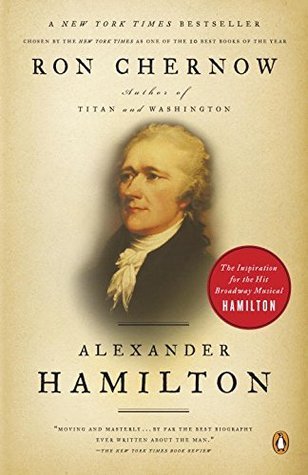
Sly reference to Hamilton becoming a part of American History, and perhaps even to the book, Alexander Hamilton, written by Ron Chernow that inspired the musical.
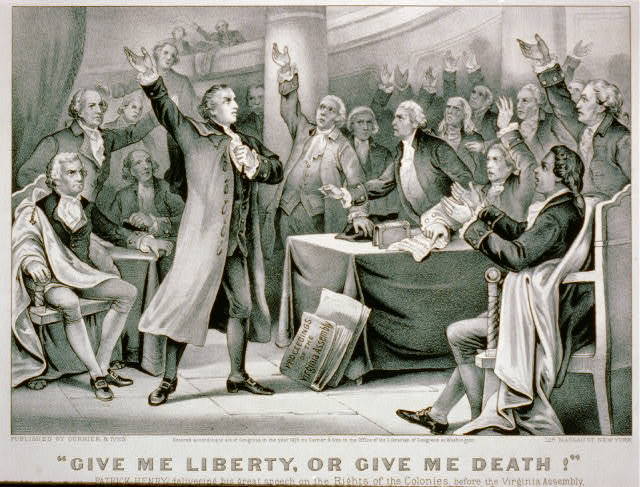
Hamilton also displays a swooning fascination with martyrdom, telling the colonists they should vow either to “lead an honourable life or to meet with resignation a glorious death.”
To quote another famous revolutionary, Patrick Henry:
Eventually, you'll see my ascendancy
Ascendency here has multiple meanings relating to the past two lines, both history books and laying down one’s life. “Ascendancy” is defined as being dominant, particularly through gaining political or economic power. Furthermore, the line can also be connected to the show’s overarching theme of “rising up” as in upward mobility—out of poverty/obscurity and through the ranks, i.e. “Eventually you’ll see me [having risen in social status].”
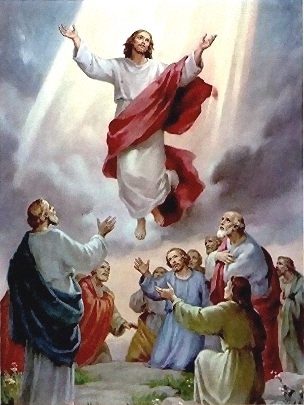
But at the end of the show we witness his death and we see him metaphorically head on up to “the other side,” when he lays down his life in the duel with Burr. That’s a whole other kind of ascension…
“For oh! I long to gain that height
Where all celestial beings sing
Eternal praises to their King.”
[HAMILTON &
]
And I am not throwing away
My shot (My shot)
Matching these two characters here is interesting because they both achieve an ironic did-and-didn’t fulfillment of this prophecy:
Hamilton, of course, fulfills many of his ambitions, particularly those of Act I. He contributes to the war effort, wins glory and status, and creates a legacy by helping to found a new nation through the US Constitution. However, in Act II, his brashness gets the better of him. He falls, rather spectacularly, out of political favor, figuratively throwing away his shot at securing his legacy as a founding father. And of course, that same brashness leads to his duel with Burr, where he literally throws away his shot and has his life cut short.
Similarly, with Laurens, we see him win glory and accolades throughout the war, and even see him making progress in his dream of an all-black batallion. In his duel with Lee (“Ten Duel Commandments”/“Meet Me Inside”), Laurens does not throw away his (literal) shot, wounding Lee. However, the brashness that guides him through those accomplishments also leads him to skirmish with the British in South Carolina after the war was over, causing him to throw away his figurative shot at achieving his dreams of black emancipation. He doesn’t live to see Act II at all.
I am not throwing away
My shot (My shot)
Matching these two characters here is interesting because they both achieve an ironic did-and-didn’t fulfillment of this prophecy:
Hamilton, of course, fulfills many of his ambitions, particularly those of Act I. He contributes to the war effort, wins glory and status, and creates a legacy by helping to found a new nation through the US Constitution. However, in Act II, his brashness gets the better of him. He falls, rather spectacularly, out of political favor, figuratively throwing away his shot at securing his legacy as a founding father. And of course, that same brashness leads to his duel with Burr, where he literally throws away his shot and has his life cut short.
Similarly, with Laurens, we see him win glory and accolades throughout the war, and even see him making progress in his dream of an all-black batallion. In his duel with Lee (“Ten Duel Commandments”/“Meet Me Inside”), Laurens does not throw away his (literal) shot, wounding Lee. However, the brashness that guides him through those accomplishments also leads him to skirmish with the British in South Carolina after the war was over, causing him to throw away his figurative shot at achieving his dreams of black emancipation. He doesn’t live to see Act II at all.
Hey, yo, I'm just like my country ⮐ I'm young, scrappy and hungry
Hamilton was the youngest Founding Father and ended up becoming the first Secretary of the Treasury when he was just 34. Throughout his rise to power, he incessantly called out people and policies, fighting to build what he believed to be the best foundations possible for the nation.
“Hungry” may reference the beginning of Jay-Z’s “My First Song”, which features an interview between the Notorious B.I.G. and Puff Daddy, where Smalls describes the secrets to success – maintaining a sense of urgency (which is the theme of Jay’s song as well). Biggie says:
Gotta try to stay above water y'know. Just stay busy, stay working. Puff told me like, ‘the key to this joint –the key to staying on top of things is treat everything like it’s your first project, nomsayin’? Like it’s your first day like back when you was an intern. Like, that’s how you try to treat things like, just stay hungry.
And I'm not throwing away my shot ⮐ And I'm not throwing away my shot
Matching these two characters here is interesting because they both achieve an ironic did-and-didn’t fulfillment of this prophecy:
Hamilton, of course, fulfills many of his ambitions, particularly those of Act I. He contributes to the war effort, wins glory and status, and creates a legacy by helping to found a new nation through the US Constitution. However, in Act II, his brashness gets the better of him. He falls, rather spectacularly, out of political favor, figuratively throwing away his shot at securing his legacy as a founding father. And of course, that same brashness leads to his duel with Burr, where he literally throws away his shot and has his life cut short.
Similarly, with Laurens, we see him win glory and accolades throughout the war, and even see him making progress in his dream of an all-black batallion. In his duel with Lee (“Ten Duel Commandments”/“Meet Me Inside”), Laurens does not throw away his (literal) shot, wounding Lee. However, the brashness that guides him through those accomplishments also leads him to skirmish with the British in South Carolina after the war was over, causing him to throw away his figurative shot at achieving his dreams of black emancipation. He doesn’t live to see Act II at all.
[HAMILTON/MULLIGAN/LAURENS/LAFAYETTE]
I am not throwing away my shot ⮐ I am not throwing away my shot
A running refrain throughout the play. Refers to the young and ambitious Hamilton’s shot at glory, but also foreshadows his fateful duel with Burr. The question of whether or not Hamilton chose to throw away his shot in his final duel was a huge controversy at the time, and continues to plague Hamilton’s legacy.
Lyrically, Miranda’s use of the refrain takes inspiration from Eminem’s “Lose Yourself.”
Musically, Hamilton’s repeating “My Shot” motif incorporates a classic snare drum “double bounce” rhythm, reminiscent of a fife and drum snare line that would have been a soldier’s call to arms during Colonial and Revolutionary times. An example.
Also worth noting that Miranda uses less of the My Shot motif in Act II (with the noted exception of the double meaning of throwing away his shot in the Burr duel) as Hamilton had moved past his military glory and had achieved success in life.
The motif of “throwing away one’s shot” may stem from a letter of Hamilton’s written prior to his duel with Burr. In the letter, aptly titled “Statement on Impending Duel with Aaron Burr”, Hamilton writes:
I have resolved, if our interview is conducted in the usual manner, and it pleases God to give me the opportunity, to reserve and throw away my first fire, and I have thoughts even of reserving my second fire—and thus giving a double opportunity to Col Burr to pause and to reflect."
Hey, yo, I'm just like my country ⮐ I'm young, scrappy and hungry
Hamilton was the youngest Founding Father and ended up becoming the first Secretary of the Treasury when he was just 34. Throughout his rise to power, he incessantly called out people and policies, fighting to build what he believed to be the best foundations possible for the nation.
“Hungry” may reference the beginning of Jay-Z’s “My First Song”, which features an interview between the Notorious B.I.G. and Puff Daddy, where Smalls describes the secrets to success – maintaining a sense of urgency (which is the theme of Jay’s song as well). Biggie says:
Gotta try to stay above water y'know. Just stay busy, stay working. Puff told me like, ‘the key to this joint –the key to staying on top of things is treat everything like it’s your first project, nomsayin’? Like it’s your first day like back when you was an intern. Like, that’s how you try to treat things like, just stay hungry.
And I'm not throwing away my shot
This is iconic and is foreshadowing! As you most likely know in the end of the show Hamilton does throw away his shot. Even though he is talking about an opportunity when saying this, this has duel meanings (haha, duel)! In the end of the show Aaron Burr and Alexander Hamilton get into a duel. Hamilton puts his gun in the air and shoots in the air! Meanwhile, Burr shoots directly at Hamilton which eventually kills Hamilton.
It's time to take a shot
A pun simultaneously referencing drinking shots of liquor, making an attempt at something, and firing guns.
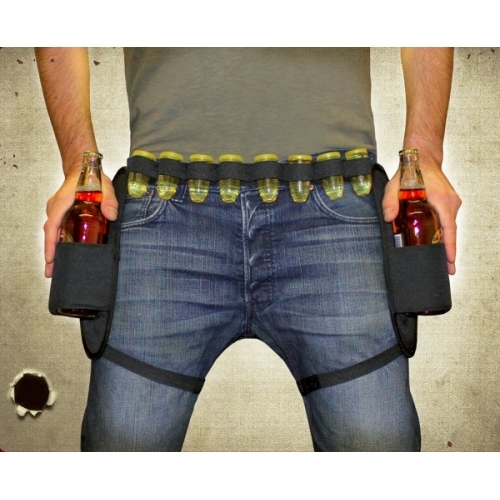
Do not throw away your liquor holster??
[LAFAYETTE]
I dream of life without a monarchy ⮐ The unrest in France will lead to 'onarchy? ⮐ 'Onarchy? How you say, how you s-oh, 'anarchy!' ⮐ When I fight, I make the other side panicky
In this introduction to our French hero, Miranda cheekily uses Lafayette’s troublesome accent to help along his false rhymes.
Lafayette’s first pronunciation (“onarchy”) is faithful to how a native French speaker would likely pronounce the English word “anarchy” with a French accent. The sound of the initial “a” in “anarchy” (phonetically “æ”) does not exist in French and is a difficult vowel sound to pronounce. When the “æ” sound comes at the very beginning of an English word, it is often pronounced like a soft “o” (as in the word “hot”), which is much more similar to some French vowel sounds.
Miranda uses rapping sophistication to convey Lafayette’s progression from young revolutionary to brilliant military commander, culminating in Lafayette delivering the fastest song in Broadway history in “Guns and Ships.” Miranda said:
Lafayette has this great arc where he starts out rhyming words that don’t really rhyme and he can’t really figure it out. As he becomes comfortable — and a general — he can do this really complicated, technical, fast stuff. It’s like him mastering this language.
The Marquis de Lafayette was a young French nobleman who believed in the cause of the American Revolution. His support was essential for providing the French ships and troops that enabled Washington to defeat the British at Yorktown and win the Revolutionary war.
Afterwards, he returned to France and helped lead the storming of the Bastille, which kicked off the French Revolution. Unfortunately, despite these anarchic beginnings, as the revolution moved forward, he and his aristocratic cohort would be pushed out of the movement as the Robespierre’s more totalitarian Reign of Terror commenced. Lafayette spoke out against their movements and would spend five years imprisoned. He and his wife suffered greatly at their hands, but at least they both made it through with their necks intact. See this annotation in “Cabinet Battle #2” for more information.
With my—
[HAMILTON/LAURENS/LAFAYETTE/MULLIGAN]
Shot
Lafayette isn’t just a excellent rapper, he’s also an great soldier. Or, you could say, a great shot.
Hercules Mulligan opened a haberdashery that catered to wealthy redcoat soldiers in New York, allowing him to gain the trust of British officers—a trust he exploited to spy for the colonists.
The reference to “apprenticeship” is not historically accurate. Mulligan quit working for his father’s accounting firm to go out on his own and start the business in 1774, meaning he was a fully realized tailor before the action in the musical even starts. However, the change to make Mulligan a tailor’s apprentice makes Mulligan seem as youthful and ambitious as the others.
And I got y'all knuckleheads in loco parentis
In loco parentis is Latin for “in the place of parents.” There’s something of a pun in acting in the place of parents in association with the Founding Fathers. Furthermore, “loco” is Spanish for “crazy,” appropriate for Mulligan’s rough, loose vocal style.
So, alternatively, Mulligan could be said to have been acting in loco parentis while allowing the young Hamilton to reside in Mulligan’s home while Hamilton attended college.
Actually, Mulligan was nearly 15 years older than Alexander Hamilton and his cohort, with Hamilton and Lafayette both orphaned from a young age and John Laurens' passion for abolition conflicting with his father’s slave ownership. So it could be said that although he was their friend, Mulligan was also acting in the place of the parents of all three younger men.
I'm joining the rebellion 'cause I know it's my chance ⮐ To socially advance, instead of sewin' some pants
Hercules Mulligan opened a haberdashery that catered to wealthy redcoat soldiers in New York, allowing him to gain the trust of British officers—a trust he exploited to spy for the colonists.
The reference to “apprenticeship” is not historically accurate. Mulligan quit working for his father’s accounting firm to go out on his own and start the business in 1774, meaning he was a fully realized tailor before the action in the musical even starts. However, the change to make Mulligan a tailor’s apprentice makes Mulligan seem as youthful and ambitious as the others.
I'm gonna take a—
[HAMILTON/LAURENS/LAFAYETTE/MULLIGAN]
Shot
In the tradition of verse drama (Shakespeare, Moliere, etc.), characters who share or split a line in the verse traditionally do so to show that they are in agreement—in sync. With the gang here completing not only each others' thoughts, but also their rhythmic obligations in the verse, the lines immediately establish the four of them as a unit that thinks and acts together. Since Burr is not in on this process of completing the ideas, the audience can also see that while he is not directly against the team, he is also not one of them.
This compositional conceit carried over the generations all the way into hip-hop music, with this line mimicking the style of groups like Beastie Boys where, after independent rapping, everyone joins in on the last word of the line to create a unified sound.
But we'll never be truly free ⮐ Until those in bondage have the same rights as you and me ⮐ You and I, do or die, wait 'til I sally in ⮐ On a stallion with the first black battalion
John Laurens was from a wealthy slave-trading South Carolina plantation family, but he was morally opposed to slavery and racism. During the Revolutionary War, Laurens raised a brigade of 3,000 black soldiers by promising them freedom in return for fighting. He fought with black soldiers in the Carolinas, but was killed in battle, age 27. So he did and died.
“or retalion / all fine young black females stallions.”
The line “You and I. Do or Die,” also brings to mind a lyric from Pasek and Paul’s musical Dogfight. The lyric there is
“Semper fi, do or die.”
John Laurens was, historically, the most ardently abolitionist of the whole group of men that worked and fought together at this time; certainly more so than Hamilton, who traded and even owned slaves. Laurens' idea of a black battalion was one that he fought for, bringing it up in front of Congress and writing passionately about it to his father (who, incidentally, was one of the largest slaveholders in the South). Of course, the hopefulness and determination of this line is undercut by the ironic and kind of depressing foreshadowing that Laurens does not live to see that glory.
Have another—
[HAMILTON/LAURENS/LAFAYETTE/MULLIGAN]
Shot
They are no longer talking about the metaphorical “shot” or gun. They are talking about liquor.
[BURR]
Burr is at odds with the rest of the gang, both in terms of what he’s saying and how the music is saying it. While everyone else is rapping quickly, Burr’s flow is slower, smoother, more calculated—almost like spoken word. He’s making the choice not to join in the heart-on-sleeve rapping.
Instrumentally, Laurens, Mulligan, and Lafayette are rapping over a slow picked bass and drum set. Burr raps over the same melody and rhythm, but done pizzicato on violins and a guitar (the drums and bass drop out). Musically, he’s both on the same page and totally not. His music is higher and seems more tentative. His pizzicato backing is literally inharmonic.
The real-life Aaron Burr is inaccurately characterized here. As a young man he was a staunch and well-known supporter of the revolution – by the date of this song (1776) Burr was already a famed and celebrated Revolutionary War Hero for his role at the Battle of Quebec in 1775 (referenced in “Right Hand Man”).
Later in his post-war political career he would at times be reticent about his opinions and political allegiances. But to essentialize him as such and imply that he acted this way throughout his life is… well, a convenient narrative shortcut.
Geniuses, lower your voices ⮐ You keep out of trouble and you double your choices
Actually, the phrase “geniuses” has a double meaning here. In the denotation, Burr recognizes the group’s intelligence. In the connotation (hello, modern sarcasm), Burr reminds the group that other pub patrons may be Loyalists—and therefore possible opponents.
The situation’s fraught,
Fraughter than I thought,
With horrible,
Impossible,
Possibilities!
You've got to be carefully taught
A reference to the song of the same title in Rodgers and Hammerstein’s musical South Pacific. This song speaks on the issue of racism, and how it’s not an instinct, but rather a fear that must be ingrained in children through extensive social indoctrination.
It’s notable that Lin-Manuel gives this line to Burr. In South Pacific, Lt Cable sings it out of frustration and acknowledgment that he cannot overcome the racism he grew up with, although he thinks he wants to reject it and find happiness with Liat. Ultimately the tragedy of that show is his inability to reconcile what he knows to be right with how he’s comfortable behaving.
Similarly, Burr claims to share the revolutionary spirit and ideals of Hamilton and co, but throughout his arc he remains unwilling to publicly embrace them. He’s held back by his adherence to respectability politics. He wants to be in “the room where it happens,” but can’t bring himself to clearly stake out a position on anything, and so always finds himself shunted aside. When he finally decides to go after what he wants, his bid for president is rejected by Hamilton because of his purposeful avoidance of any radical (or even just firm) views. Burr’s dream fails to be realized because he never overcame this form of ‘carefully taught’ internalized oppression.
When he finally takes action after 30 years of accumulated slights, the results are inevitably tragic.
If you talk, you're gonna get shot
In the stage production, this line is followed by all of them doing a shot of alcohol, brought from Burr to the table from the bar.
Lyrically, this is yet another reference to the forthcoming duel with Hamilton. The duel occurs because Hamilton can’t keep his mouth shut.
This also feels like further commentary beyond just respectability politics, to issues of police brutality specifically—if you don’t perfectly bend to racist expectations, if you try to defend your rights by talking back, you’re all the more likely to be hurt or killed.
[HAMILTON]
Burr, check what we got
This is Hamilton’s version of a rap crew/squad and within the course of this song he’s quickly taking the leadership role, doing the “intros.”
Mister Lafayette, hard rock like Lancelot
Hamilton picks up Lafayette’s self-identification with Lancelot, Frenchborn and fiercest of the Knights of King Arthur’s Round Table. Lafayette was himself a great military leader who led several battles during the Revolutionary War. His exploits are recounted in “Guns and Ships.”
The use of the phrase “hard rock” may be a punning reference: the popular 1960 musical Camelot, the subject of most Lancelot references in Hamilton, followed the version of Arthurian legend where Arthur became king by pulling a sword from a stone.
When Lafayette returned to Boston he was openly welcomed as foreign knight come to save the war:
“a knight in shining armor from the chivalric past, come to save the nation” -Unger, Harlow Giles (2002)
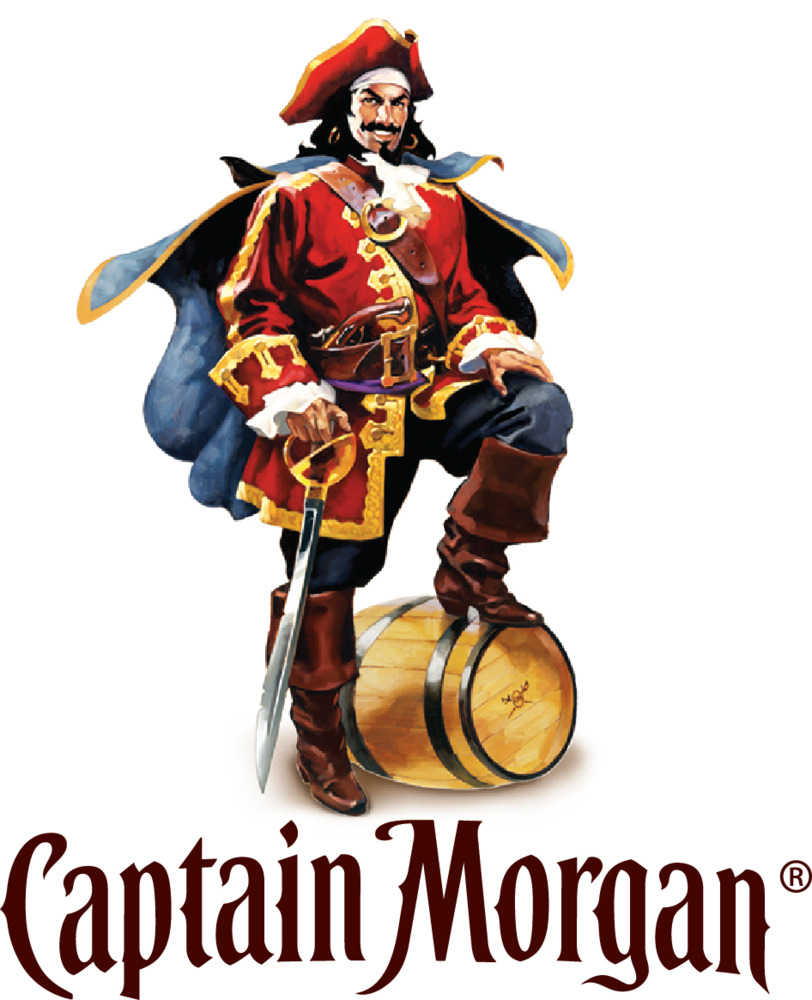
At this line, Hercules Mulligan stands in profile on stage. He thrusts his hips forward, while putting one foot up on a bench, looking altogether like Captain Morgan. At the same time, he sweeps his long coat back to reveal his pants with a proud expression.
The sartorial observation could also be a commentary on French revolutionary politics. Lafayette was an aristocratic revolutionary, and the social distinctions between the revolutionaries were usually marked by their clothes, e.g. their pants. Poor revolutionaries were known as “sans-culottes,” coulottes being the knee-length breeches traditionally worn by the aristocracy as opposed to the pants – pantalons – of the lower classes.
Laurens, I like you a lot
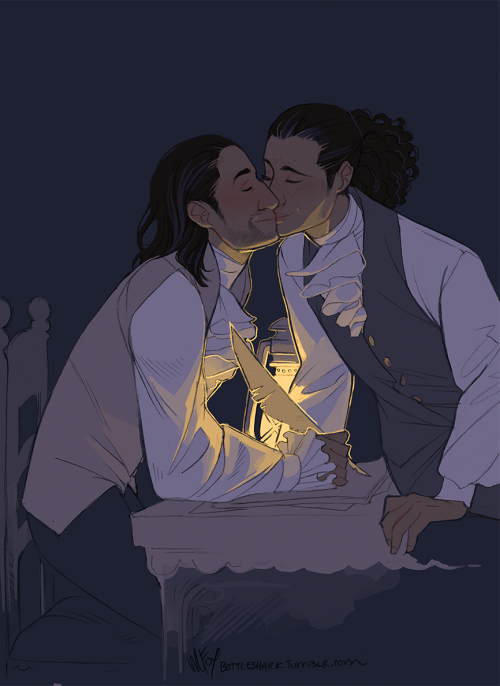
Historically, Hamilton liked Laurens so much that historians speculate as to whether they were lovers. Back then, expressions of friendship between men were generally warmer and more emotionally open than society allows them to be today… but still. See the opening paragraph of this very saucy letter from Hamilton to Laurens:
Cold in my professions, warm in my friendships, I wish, my Dear Laurens, it might be in my power, by action rather than words, to convince you that I love you. I shall only tell you that ’till you bade us Adieu, I hardly knew the value you had taught my heart to set upon you. Indeed, my friend, it was not well done. You know the opinion I entertain of mankind, and how much it is my desire to preserve myself free from particular attachments, and to keep my happiness independent on the caprice of others. You should not have taken advantage of my sensibility to steal into my affections without my consent. But as you have done it and as we are generally indulgent to those we love, I shall not scruple to pardon the fraud you have committed, on condition that for my sake, if not for your own, you will always continue to merit the partiality, which you have so artfully instilled into me.
At some points… H’s words have been crossed out so that it is impossible to decipher them; and at the top of the first page, a penciled note, which was presumably written by J. C. Hamilton, reads: “I must not publish the whole of this.”
The masterful word choice gives this whole section a double meaning. When Hamilton says, “hatch a plot,” the plot could be a scheme, but the action in a play is also called the plot. The scheme they are coming up with is “blacker than the kettle calling the pot” because it is open rebellion against England, and therefore treason. Kettles are used to make tea, a possible reference to the Boston Tea Party, a crucial moment in the history of U.S. independence. The play could be understood to be “blacker than the kettle calling the pot” in the sense that it casts actors of color in the roles of historically white figures – exemplifying the American melting “pot”. The line is a spin on the idiom “the pot calling the kettle black,” which is used to point out hypocrisy. One of the greatest shames in U.S. History is that the same white founders who ranted about liberty kept black slaves in bondage—the ultimate hypocrisy.
What are the odds the gods would put us all in one spot
Hamilton actually met some of these men years apart from each other. For example, Hercules Mulligan took Hamilton in when the latter first arrived in New York in 1773, three years before this scene takes place. Hence it’s not “god,” but the author Miranda who “put them all in one spot.” Still, a few anachronisms notwithstanding, the musical is historically accurate for the most part. It also makes sense as a dramatic device to introduce these important contemporaries of Hamilton’s all at once.
Poppin' a squat on conventional wisdom, like it or not
Hamilton and his cohort were really flying in the face of convention at the start of the revolution. As he says in the next line, not only were they radical for supporting independence (very radical: Mulligan ran with the underground Sons of Liberty and Lafayette defied his own monarch to come to America), they were all even more keenly and unusually radical for also supporting universal manumission and the abolition of the slave trade (Hamilton spoke out against the Caribbean slave trade despite having worked for and been supported by the owner of a trading charter; Laurens spoke out against his own father regarding the use of slaves on Southern plantations). Like it or not, they were really shitting extra hard on what most people thought of as normal, everyday facts of their existence.
A bunch of revolutionary manumission abolitionists?
Manumission is the act of freeing people from slavery. Abolitionists wanted to abolish the practice of slavery entirely. Two words with similar sounds and meanings.
Hamilton and Mulligan were both early and long-time members of the New York Manumission Society, dedicated to ending the institution of slavery. The society would tap Hamilton to craft a petition to the New York government condemning slavery. In it, he called the slave trade
a commerce so repugnant to humanity, and so inconsistent with the liberality and justice which should distinguish a free and enlightened people.
It’s easy to see why they would get along with Laurens and Lafayette, who also opposed slavery.
Note the use of assonance here, with the “mission” in “manumission” and “lition” in “abolitionists” echoing the same sound. This is carried over into the next line with “position” and “ammunition.”
It is important to note that while the show, and many historians, portray Hamilton and his cohorts as staunch abolitionists, at the time, it was not uncommon to hypothetically support the end of slavery while practically engaging with slaves or even owning them. Laurens came from a slave-owning family, while Mulligan owned a slave called Cato.
Hamilton worked in trade, including slaves, while living in the Caribbean, married into one of the largest slave owning families in New York, and frequently helped his in-laws (like the Churches) purchase slaves. His abhorrence of slavery was more of a forward-thinking, do as I say not as I do, kind of deal than historians such as Chernow would like modern readers to believe.
Historian Lyra Monteiro also points out that although Hamilton didn’t own any slaves (because he was to poor to afford them), he is documented to have ‘hired in’ slave(s). “Hiring out” is the practice of renting out surplus slaves on a per-year or per-job basis.
From her essay “Race-Conscious Casting and the Erasure of the Black Past in Lin-Manuel Miranda’s Hamilton” which was published in The Public Historian
Give me the mic! Show me where the fuckin' studio’s at
After this line, but before “Oh, am I talkin' too loud?”, the music drops out and there is a wooshing sound effect similar to that used in “The World Was Wide Enough” during Hamilton’s spoken-word death monologue, indicating to second-or-more-time listeners that these lines are both lyrically and musically foreshadowing Hamilton’s death.
The “whoosh” sound is a gunshot sound effect played in reverse (confirmed by Miranda and Alex Lacamoire on twitter).
Sometimes I get overexcited, shoot off at the mouth
A play on words referencing both Hamilton’s talkativeness and his scrappiness, and connecting those personality traits to the modern idiom of “shooting off at the mouth,” foreshadowing how they combine to bring about Hamilton’s fatal duel.
Some accounts of the duel with Burr actually speculate that Hamilton’s bullet passed right past Burr’s face (i.e. off at the mouth?), as a way to miss without deloping, since you weren’t allowed to aim high. Historian Joseph Ellis says:
Hamilton did fire his weapon intentionally, and he fired first. But he aimed to miss Burr, sending his ball into the tree above and behind Burr’s location. The bullet only skimmed Burr’s ear. In so doing, he did not withhold his shot, but he did waste it, thereby honoring his pre-duel pledge. Meanwhile, Burr, who did not know about the pledge, did know that a projectile from Hamilton’s gun had whizzed past him and crashed into the tree to his rear. According to the principles of the code duello, Burr was perfectly justified in taking deadly aim at Hamilton and firing to kill.
I never had a group of friends before ⮐ I promise that I'll make y'all proud
Growing up, Hamilton led a hard-knocks, isolated, nearly friendless existence in the Caribbean. His one close friend was the son of the merchant who took Alexander in after his mother died (and who may have been Alexander’s biological father), making for a complicated, unequal dynamic. Hamilton had some revolutionary collaborators / friends during his time at King’s College, but over the course of Hamilton’s entire life, these guys really were the first and closest friends that Hamilton ever made in his entire life.
This sentiment may also be semi-autobiographical, as Miranda has expressed that he found a similarly inspirational friend group during his undergrad years at Wesleyan. In his Wesleyan commencement speech (2015, honorary PhD) he describes how he joined a Latino group on campus, and for the first time, could show the Latino side to his personality to someone beyond his family. This acceptance and validation helped him begin to include the Latin influences in his music.
In an interview with Emma Watson, Miranda confessed that some of the inspiration for this scene came from none other than the first Harry Potter book, when Harry is on the Hogwarts train meeting fellow students. He first encounters Draco (Burr), then finds his “real” friends Ron and Hermione (Laurens, Lafayette, and Mulligan) and blows Draco off.
[LAURENS]
Let's get this guy in front of a crowd
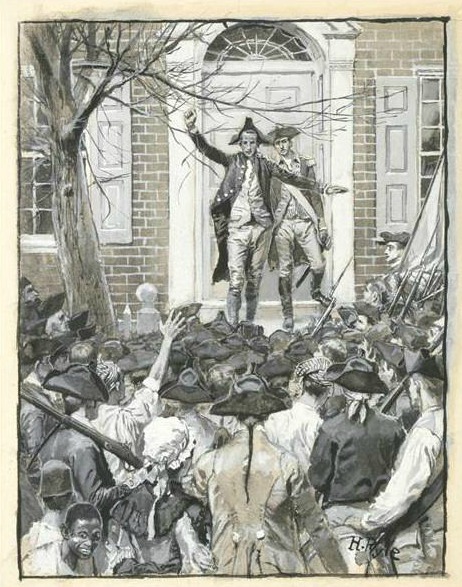
Hamilton was known for his debating and writing. He also spoke in front of crowds, as the line suggests.
One of his earliest speeches was on May, 10, 1775. A mob formed outside of the home of the President of King’s College, Miles Cooper, a vocal loyalist. Hamilton’s friend and roommate Robert Troup described Hamilton talking down the mob, giving Cooper time to escape lynching:
Hamilton took his stand on one of the stoops, and proceeded with great animation and eloquence to harangue the mob on the excessive impropriety of their conduct, and the disgrace it would bring on the cause of liberty; of which they avowed themselves to be the Champions.
Hercules Mulligan also described this event: “Dr. Cooper, President of King’s Colledge, was a tory and an obnoxious man and the mob went to the Colledge with the intention of tarring & feathering him or riding him upon a rail. Mr. H got on the stoop of the President’s House and harrangued them in order to give him time [to] escape out of the back of the House which he did & went on Board a Frigate Lying in the North river.” Quoted in Michael J. O’Brien’s Hercules Mulligan, Confidential Correspondent of General Washington (New York, 1937).
This line also reflects Miranda’s thought process when reading Chernow’s book. “I have to show people how cool Hamilton is!”, hence “Let’s get this guy in front of a crowd!”
[HAMILTON/LAURENS/LAFAYETTE/MULLIGAN/ENSEMBLE]
I am not throwing away my shot ⮐ I am not throwing away my shot
A running refrain throughout the play. Refers to the young and ambitious Hamilton’s shot at glory, but also foreshadows his fateful duel with Burr. The question of whether or not Hamilton chose to throw away his shot in his final duel was a huge controversy at the time, and continues to plague Hamilton’s legacy.
Lyrically, Miranda’s use of the refrain takes inspiration from Eminem’s “Lose Yourself.”
Musically, Hamilton’s repeating “My Shot” motif incorporates a classic snare drum “double bounce” rhythm, reminiscent of a fife and drum snare line that would have been a soldier’s call to arms during Colonial and Revolutionary times. An example.
Also worth noting that Miranda uses less of the My Shot motif in Act II (with the noted exception of the double meaning of throwing away his shot in the Burr duel) as Hamilton had moved past his military glory and had achieved success in life.
The motif of “throwing away one’s shot” may stem from a letter of Hamilton’s written prior to his duel with Burr. In the letter, aptly titled “Statement on Impending Duel with Aaron Burr”, Hamilton writes:
I have resolved, if our interview is conducted in the usual manner, and it pleases God to give me the opportunity, to reserve and throw away my first fire, and I have thoughts even of reserving my second fire—and thus giving a double opportunity to Col Burr to pause and to reflect."
Hey, yo, I'm just like my country ⮐ I'm young, scrappy and hungry
Hamilton was the youngest Founding Father and ended up becoming the first Secretary of the Treasury when he was just 34. Throughout his rise to power, he incessantly called out people and policies, fighting to build what he believed to be the best foundations possible for the nation.
“Hungry” may reference the beginning of Jay-Z’s “My First Song”, which features an interview between the Notorious B.I.G. and Puff Daddy, where Smalls describes the secrets to success – maintaining a sense of urgency (which is the theme of Jay’s song as well). Biggie says:
Gotta try to stay above water y'know. Just stay busy, stay working. Puff told me like, ‘the key to this joint –the key to staying on top of things is treat everything like it’s your first project, nomsayin’? Like it’s your first day like back when you was an intern. Like, that’s how you try to treat things like, just stay hungry.
And I'm not throwing away my shot
The refrain is riddled with syncopation in the first four lines, but this last “I’m not throwing away my shot” is straight and completely on the beat. This reinforces the conviction of the entire company and their determination to ‘get the job done’.
I am not throwing away my shot ⮐ I am not throwing away my shot
A running refrain throughout the play. Refers to the young and ambitious Hamilton’s shot at glory, but also foreshadows his fateful duel with Burr. The question of whether or not Hamilton chose to throw away his shot in his final duel was a huge controversy at the time, and continues to plague Hamilton’s legacy.
Lyrically, Miranda’s use of the refrain takes inspiration from Eminem’s “Lose Yourself.”
Musically, Hamilton’s repeating “My Shot” motif incorporates a classic snare drum “double bounce” rhythm, reminiscent of a fife and drum snare line that would have been a soldier’s call to arms during Colonial and Revolutionary times. An example.
Also worth noting that Miranda uses less of the My Shot motif in Act II (with the noted exception of the double meaning of throwing away his shot in the Burr duel) as Hamilton had moved past his military glory and had achieved success in life.
The motif of “throwing away one’s shot” may stem from a letter of Hamilton’s written prior to his duel with Burr. In the letter, aptly titled “Statement on Impending Duel with Aaron Burr”, Hamilton writes:
I have resolved, if our interview is conducted in the usual manner, and it pleases God to give me the opportunity, to reserve and throw away my first fire, and I have thoughts even of reserving my second fire—and thus giving a double opportunity to Col Burr to pause and to reflect."
Hey, yo, I'm just like my country ⮐ I'm young, scrappy and hungry
Hamilton was the youngest Founding Father and ended up becoming the first Secretary of the Treasury when he was just 34. Throughout his rise to power, he incessantly called out people and policies, fighting to build what he believed to be the best foundations possible for the nation.
“Hungry” may reference the beginning of Jay-Z’s “My First Song”, which features an interview between the Notorious B.I.G. and Puff Daddy, where Smalls describes the secrets to success – maintaining a sense of urgency (which is the theme of Jay’s song as well). Biggie says:
Gotta try to stay above water y'know. Just stay busy, stay working. Puff told me like, ‘the key to this joint –the key to staying on top of things is treat everything like it’s your first project, nomsayin’? Like it’s your first day like back when you was an intern. Like, that’s how you try to treat things like, just stay hungry.
And I'm not throwing away my shot
Moved MelMelChye’s annotation here to match the musical phrase they were referring to:
The refrain is riddled with syncopation in the first four lines, but this last “I’m not throwing away my shot” is straight and completely on the beat. This reinforces the conviction of the entire company and their determination to ‘get the job done’.
The melody for “whoa whoa whoa” recalls the piano line underlying “Alexander Hamilton,” so in a sense, what ev'rybody is singing is Hamilton’s theme song—that’s how thoroughly he’s won over and impressed not just his new friends but the entire ensemble. The “whoa whoa whoa” melody and “Alexander Hamilton” theme are later combined in the introduction to “What’d I Miss?”
This theme is also echoed later in “History Has Its Eyes on You.” Miranda is foreshadowing that the actions of Hamilton and his new friends are going to be remembered for years to come.
Lin-Manuel also stated on his Twitter account that the “Whoas” are influenced by the classic AOL dial-up sound:
The musical comparison with the AOL tone is more apparent in earlier drafts of the song.
Said, let 'em hear ya (Yeah)
LOUDER!!!!
After Laurens' call, the entire company joins in on the ‘whoa’s, instead of just Lafayette, Hercules, and Hamilton. This is a musical illustration of the increasingly united front/attitude amongst society about the revolution occurring.
Let's go
[LAURENS &
]
Woah, woah, woah
The melody for “whoa whoa whoa” recalls the piano line underlying “Alexander Hamilton,” so in a sense, what ev'rybody is singing is Hamilton’s theme song—that’s how thoroughly he’s won over and impressed not just his new friends but the entire ensemble. The “whoa whoa whoa” melody and “Alexander Hamilton” theme are later combined in the introduction to “What’d I Miss?”
This theme is also echoed later in “History Has Its Eyes on You.” Miranda is foreshadowing that the actions of Hamilton and his new friends are going to be remembered for years to come.
Lin-Manuel also stated on his Twitter account that the “Whoas” are influenced by the classic AOL dial-up sound:
The musical comparison with the AOL tone is more apparent in earlier drafts of the song.
I said, shout it to the rooftops
Woah
The melody for “whoa whoa whoa” recalls the piano line underlying “Alexander Hamilton,” so in a sense, what ev'rybody is singing is Hamilton’s theme song—that’s how thoroughly he’s won over and impressed not just his new friends but the entire ensemble. The “whoa whoa whoa” melody and “Alexander Hamilton” theme are later combined in the introduction to “What’d I Miss?”
This theme is also echoed later in “History Has Its Eyes on You.” Miranda is foreshadowing that the actions of Hamilton and his new friends are going to be remembered for years to come.
Lin-Manuel also stated on his Twitter account that the “Whoas” are influenced by the classic AOL dial-up sound:
The musical comparison with the AOL tone is more apparent in earlier drafts of the song.
Said, to the rooftops
Woah
The melody for “whoa whoa whoa” recalls the piano line underlying “Alexander Hamilton,” so in a sense, what ev'rybody is singing is Hamilton’s theme song—that’s how thoroughly he’s won over and impressed not just his new friends but the entire ensemble. The “whoa whoa whoa” melody and “Alexander Hamilton” theme are later combined in the introduction to “What’d I Miss?”
This theme is also echoed later in “History Has Its Eyes on You.” Miranda is foreshadowing that the actions of Hamilton and his new friends are going to be remembered for years to come.
[LAURENS] ⮐ Rise up ⮐ When you're living on your knees, you rise up ⮐ Tell your brother that he's gotta rise up ⮐ Tell your sister that she's gotta rise up
The anthemic nature of Laurens call for Americans, particularly the Americans of this racially diverse cast, to “rise up” from their oppression has been conflated with and influenced by America’s recent upsurge in outrage regarding its epidemic of police brutality cases against people of color, and the birth of the #blacklivesmatter movement, a connection which Miranda welcomes and agrees is timely:
“I have a lot of apps open in my brain right now,” [Miranda] said. “The script, learning choreography, and Twitter. And the news.” That afternoon, in New York, a grand jury announced that it would not indict the police officer Daniel Pantaleo in the death of Eric Garner, the Staten Island man who was choked to death last summer, after being apprehended for selling loose cigarettes. A week earlier, there had been riots in Ferguson, Missouri, after a grand jury there also failed to indict a white policeman, Darren Wilson, in the shooting death of an African-American man, Michael Brown. “We’re screaming ‘Rise up,’ and a lot of people are feeling that way,” Miranda said to the New Yorker.
This line could also be an allusion to Mexican revolutionary Emiliano Zapata’s famous statement, “I’d rather die on my feet than live on my knees,” a statement certainly consistent with Hamilton’s aspirations (and quoted in a posthumous Biggie song).
[LAURENS AND ENSEMBLE &
]
When are these colonies gonna rise up? ⮐ Woah, woah, woah ⮐ When are these colonies gonna rise up? ⮐ Woah ⮐ When are these colonies gonna rise up? ⮐ Woah ⮐ When are these colonies gonna rise up? ⮐ Woah ⮐ Rise up (Rise up)
Incidentally, Busta Rhymes went to see Hamilton. Apparently he was so inspired by the show, he dressed like King George during a performance of “Pass the Courvoisier, Part II” at Madison Square Garden the following night.
[HAMILTON]
I imagine death so much, it feels more like a memory ⮐ When's it gonna get me?
Foreshadows to a later, literal use of this line during Hamilton’s final monologue in “The World Was Wide Enough” in which Hamilton literally starts talking about his death as a memory in the moments before he’s shot.
The tinkling piano behind this verse and most of the song falls in line with the theme of death being a memory. It sounds distant, like it’s been deep in the realms of memory and is being recalled.
Figuratively, this line helps to establish Hamilton’s driving need to write and contribute as much as possible, as fast as possible. He grew up facing unimaginable hardship, and had lost so much to death already—violent, inglorious death at that. The undignified horror of illness, the incomprehensible nature of suicide, the wanton destruction of a natural disaster… For him death isn’t something far in the future, it’s something he lives with every day.
Miranda has stated that this line is autobiographical, referring to his awareness of death beginning when he was four years old, when a friend of his drowned in an accident.
Historically, Hamilton was often anxious and suffered from insomnia, especially as he made more enemies. This is in part what contributed to his incredible ability for writing day and night.
Seven feet ahead of me?
Hamilton left seven children behind when he died.
The duel where he was shot started at 7am.
In a later song in this show, “Blow Us All Away,” Philip (Hamilton’s son) was shot early—at the count of seven out of ten—by his opponent in his duel. Number 7 (sept) is also the point in the song Philip and Eliza sing at the piano in “Take A Break” where Philip “changed the melody every time (I would always change the line).”
Hamilton’s grief over Philip’s death changed Hamilton irrevocably, and historians and the show both suggest it played a part in Hamilton’s actions in his fatal duel with Burr.
If I see it comin', do I run or do I let it be?
Hamilton struggles with some suicidal ideation throughout the musical (some historians have offered it as an explanation for his historical actions during the Burr-Hamilton duel), and this line points it out. Also notable is that he mentions that he dreams of dying like a martyr, which can be interpreted as him accepting death when it comes, maybe even with gladness.
Is it like a beat without a melody?
Foreshadowing another use of this verse in Hamilton’s death monologue in “The World Was Wide Enough” in which “there is no beat, no melody” except for Hamilton’s voice, which forms its own asynchronous rhythm.
A similar silence descends earlier in the show when Hamilton’s son, Philip, dies. There too, the musical melody drops out, with only the “beat” of his heart left in the background.
See, I never thought I'd live past twenty
Hamilton is only nineteen, but a heartbreakingly old nineteen. His line has a touch of fatalism because of this—“I wasn’t planning to make it to twenty anyway, I can risk my life because anything past today is icing on the cake.”
This creates a connection between Hamilton’s difficult childhood and the hip hop tradition of rappers giving shout outs to the hard neighborhoods that raised them. It’s a way of calling out America’s urban (and very racial) gap in the standard of living—kids in inner cities are more likely to die because of gang violence or drug activity than suburban kids tucked up in their white flight oases.
Death ain’t nothing but a heart beat away
I’m living life do or die, what can I say I’m twenty three now, will I live to see 24?
The way things is going I don’t know.
Which was in turn inspired by the 2Pac song “Pain”
I’m drinkin' Hennessey, runnin' from my enemies
Will I live to be 23? There’s so much pain
Nevis and St. Croix were devastated in the Colonial era by French attacks on the islands, and only further crippled by the hurricane Hamilton lived through. Some history.
Furthermore, if you weren’t a plantation owner or a tradesman that worked with the plantations, there was a good chance you struggled to make ends meet, or worse, were a slave. Even a solid income was no guarantee, as some people, like Hamilton’s mother, just succumbed to illness and died.
The 1700s were a harsh time for average life expectancy in general. Chernow himself points out that Alexander’s grandmother had seven children and five of them died in infancy or childhood.
Miranda has confirmed some wordplay here, as half of twenty is ten, as in Hamilton getting put on the ten-dollar bill. The line also inventively features three consecutive rhyming words—“…come from some…”—marked by three even quavers.
Ask anybody why we livin' fast
Later in the play, Burr notes that he does “live fast” when he asks why he writes like he’s running out of time; Hamilton is so aware of his own mortality that he takes every opportunity he gets to make his mark on the world.
and we laugh, reach for a flask
This verse is closely intertwined with a prevailing sentiment within hip-hop music — particular the gritty turn of ‘90s gangsta/street rap. Namely, “Of course I’m living large while I can, I came from nothing and could be dead tomorrow.” This is prevalent especially within East Coast classics like “Juicy” and Nas’s “Life’s a Bitch.”
Hamilton and company later revisit this “live fast, die young” attitude in “The Story of Tonight.”
We have to make this moment last, that's plenty
Here and in the previous two lines, the rhythm and lyrics recall Eminem’s famous lines in Lose Yourself, below. The parallel between Hamilton and Eminem (in general and in their word choice–you only get one shot!) seems clear: both are men from rough circumstances, pulling themselves up through the power of the words. However, when Alexander says “Scratch that, this is not a moment, it’s the movement” he distinguishes himself from Eminem — he’s not thinking just of himself or his own success, but of a broader human cause.
From Lose Yourself:
You better lose yourself in the music, the moment
You own it, you better never let it go (go)
You only get one shot, do not miss your chance to blow
This opportunity comes once in a lifetime (yo)
“That’s plenty” isn’t something you can expect to hear again from Hamilton. In contrast to his wife Eliza, who, though she was born into wealth, always sees what they have as “enough”, Hamilton is “never satisfied”. As his prominence grows, so too does his ambition, and in his final monologue we hear Hamilton lament that he is “running out of time” for all that he would have liked to do.
Scratch that
Alexander is known throughout the rest of the play to never be satisfied—nothing is “plenty,” nothing can “be enough,” nothing can “satisfy” him. Saying “scratch that” directly after “that’s plenty” foreshadows this.
A little bit of wordplay here in “scratch that.” Heard in one era, we get “cross that out”—remember, they still wrote with quills back in the 1700s. In another, we get “scratch that” as in DJ scratching. The music even changes to follow along with Hamilton’s shift in thought.
What’s really extraordinary is that they both still mean “hold up, step back a second, let me spin this in a new direction.” Lin-Manuel Miranda distills his concept for Hamilton as a marriage of form (hip-hop) and function (a story of America then, told by America now) right down into two words.
This is not a moment, it's the movement ⮐ Where all the hungriest brothers with ⮐ Something to prove went? ⮐ Foes oppose us, we take an honest stand
Later, in the song “The World was Wide Enough,” Hamilton refers to America as an unfinished symphony. A “movement” can refer to a portion of a musical piece in addition to a process or group advocating for change. Here we see Hamilton understanding participation in the Revolution as an early ‘movement’ in America’s history, as well as his life story.
The “endless cycle of vengeance and death with no defendants” also refers to centuries of English-French history, with each (at least partially) conquering the other repeatedly back and forth (e.g., the Norman Invasion of 1066 and the English invasion led by Henry V)—history that Hamilton and others would know quite well. These lines dramatically foreshadow both the the King of France’s future support for the Revolution and the (“Cabinet Battle #2”) decision to stay out of the latest English-French contretemps.
Chernow writes that Hamilton’s upbringing instilled conflicting fears in him of both tyranny and anarchy, leading him to be wary of the potential for “an endless cycle of vengeance and death.” His writings at King’s College reflect this careful attitude:
Clearly, this ambivalent twenty-year-old favored the Revolution but also worried about the long-term effect of habitual disorder, especially among the uneducated masses. Hamilton lacked the temperament of a true-blue revolutionary. He saw too clearly that greater freedom could lead to greater disorder and, by a dangerous dialectic, back to a loss of freedom.
Moreover, “Not a moment, a movement” has become a watchword of the #blacklivesmatter movement. The phrase itself has been growing in popularity among grassroots youth activists for a number of years.
It’s interesting that he begins this stretch of verse with a phrase so close to the lives of black Americans. Possibly as a hint that there is a second interpretation of the remainder of this verse in the context of black America. If so, that might make “independence” and “freedom” as the abolishing of slavery, and whether or not there would still be a cycle of vengeance and violence in society after (ex. Jim Crow, segregation and later crime in inner cities).
The second half of the verse beginning with “action in the streets” would then refer to the cycle of violence in cities that is often subject matter in hip-hop. And saying that his view of the solution is going other routes finding ways to solve the economic problems in inner cities (“we need to handle our financial situation”) and push for changing expectations in larger american society (“smashing every expectation”).
The line, “death with no defendants” may also point to the lack of justice for African American victims of institutional violence, such as the failure to get Darren Wilson indicted for the murder of Michael Brown in 2014. Therefore, it could mean a crime with no literal defendant in court; no one to be held accountable for a lost life.
The lines, “And? If we win our independence?
Is that a guarantee of freedom for our descendants?
Or will the blood we shed begin an endless
Cycle of vengeance and death with no defendants?”, could be foreshadowing the later French Revolution that didn’t turn up as well as the American one: yes, they overthrew monarchy (for a while) but the Reign of Terror during the Revolution period wasn’t better than what they had before.
In this [link] (
) there’s a summary of the events that occured in France from the Revolution of 1789 to the Revolution of 1832 (the one that takes place in Les Misérables).
As you can see in that list of events it makes for a tumultuous period in French history. Not that all went smooth during the American Revolution, but all the revolutions that took place in France after 1789 and the “constant” come backs to monarchy in a century makes for a big and “endless cycle of vengeance and death”.
The allusion to Exodus is common in the African-American creative vernacular, as it references America’s own history of slavery. Thus, we have Hamilton’s own biblical level of allusion, and the secondary hip hop contemporary allusion.
There’s also a secondary hint of sadness in this line, as while Moses led his people he himself never made it to the Promised Land. Hamilton and Laurens die young, before seeing the end of slavery.
Both Jefferson and Franklin wanted the seal of the United States to be an image of Moses leading the “Israelites” out of slavery. That wasn’t hypocritical of Jefferson at all……
Born illegitimate, Hamilton wasn’t allowed to attend the local Anglican school in Nevis. Instead, he attended a Jewish school run out of a synagogue in Charlestown. Later he would tell his son about being made to stand on a table while reciting the Ten Commandments in Hebrew.
Some historians suspect that Hamilton’s mother, Rachel Faucette, may have been Jewish. At the time of Hamilton’s birth, Nevis had a large Jewish population, and there is evidence that Faucette’s first husband – whom she never divorced- was Jewish. However, there is no proof that she or Hamilton were Jewish or practiced Judaism.
However, as Gabriela Geselowitz writes in Tablet, while “Hamilton may not have organized Kabbalat Shabbat at the Constitutional Convention…he maintained great personal respect for the Jews. His advocacy of immigration included demanding tolerance for Jewish Americans.”
What about the experience of growing up in Washington Heights? “Most of my friends were white and Jewish,” said Mr. Miranda, a profoundly affable young man who constantly shifts between energized and self-deprecating. As for the local Latino teenagers, “I was pretty isolated from them.”
And? If we win our independence? ⮐ Is that a guarantee of freedom for our descendants? ⮐ Or will the blood we shed begin an endless ⮐ Cycle of vengeance and death with no defendants? ⮐ I know the action in the street is excitin' ⮐ But Jesus, between all the bleedin' 'n' fightin' ⮐ I've been readin' 'n' writin'
Later, in the song “The World was Wide Enough,” Hamilton refers to America as an unfinished symphony. A “movement” can refer to a portion of a musical piece in addition to a process or group advocating for change. Here we see Hamilton understanding participation in the Revolution as an early ‘movement’ in America’s history, as well as his life story.
The “endless cycle of vengeance and death with no defendants” also refers to centuries of English-French history, with each (at least partially) conquering the other repeatedly back and forth (e.g., the Norman Invasion of 1066 and the English invasion led by Henry V)—history that Hamilton and others would know quite well. These lines dramatically foreshadow both the the King of France’s future support for the Revolution and the (“Cabinet Battle #2”) decision to stay out of the latest English-French contretemps.
Chernow writes that Hamilton’s upbringing instilled conflicting fears in him of both tyranny and anarchy, leading him to be wary of the potential for “an endless cycle of vengeance and death.” His writings at King’s College reflect this careful attitude:
Clearly, this ambivalent twenty-year-old favored the Revolution but also worried about the long-term effect of habitual disorder, especially among the uneducated masses. Hamilton lacked the temperament of a true-blue revolutionary. He saw too clearly that greater freedom could lead to greater disorder and, by a dangerous dialectic, back to a loss of freedom.
Moreover, “Not a moment, a movement” has become a watchword of the #blacklivesmatter movement. The phrase itself has been growing in popularity among grassroots youth activists for a number of years.
It’s interesting that he begins this stretch of verse with a phrase so close to the lives of black Americans. Possibly as a hint that there is a second interpretation of the remainder of this verse in the context of black America. If so, that might make “independence” and “freedom” as the abolishing of slavery, and whether or not there would still be a cycle of vengeance and violence in society after (ex. Jim Crow, segregation and later crime in inner cities).
The second half of the verse beginning with “action in the streets” would then refer to the cycle of violence in cities that is often subject matter in hip-hop. And saying that his view of the solution is going other routes finding ways to solve the economic problems in inner cities (“we need to handle our financial situation”) and push for changing expectations in larger american society (“smashing every expectation”).
The line, “death with no defendants” may also point to the lack of justice for African American victims of institutional violence, such as the failure to get Darren Wilson indicted for the murder of Michael Brown in 2014. Therefore, it could mean a crime with no literal defendant in court; no one to be held accountable for a lost life.
The lines, “And? If we win our independence?
Is that a guarantee of freedom for our descendants?
Or will the blood we shed begin an endless
Cycle of vengeance and death with no defendants?”, could be foreshadowing the later French Revolution that didn’t turn up as well as the American one: yes, they overthrew monarchy (for a while) but the Reign of Terror during the Revolution period wasn’t better than what they had before.
In this [link] (
) there’s a summary of the events that occured in France from the Revolution of 1789 to the Revolution of 1832 (the one that takes place in Les Misérables).
As you can see in that list of events it makes for a tumultuous period in French history. Not that all went smooth during the American Revolution, but all the revolutions that took place in France after 1789 and the “constant” come backs to monarchy in a century makes for a big and “endless cycle of vengeance and death”.
During the Revolutionary War, Hamilton wrote a lengthy letter on American politics and finances to James Duane on Sept. 3, 1780, in which he discusses revenues and the establishment of a national bank. (There were no banks in the United States until early 1782, which meant that if the government had to borrow, it could only look to wealthy individuals or foreign governments.)
Hamilton continued to be concerned with America’s financial situation. On April 30, 1781, he sent off a 12,000-word letter to Robert Morris, the new national superintendent of Finance.
Tis by introducing order into our finances—by restoreing public credit—not by gaining battles, that we are finally to gain our object. …
[The institution of a National Bank] I regard, in some shape or other as an expedient essential to our safety and success …
Are we a nation of states? What's the state of our nation?
At the time of the Revolution, “the United States” didn’t exist. The colonies all thought themselves independent countries who banded together to fight the British. The Articles of Confederation actually confirmed this conception of many independent states working together. The idea of the United States as one country, rather than a collection of independent states, didn’t begin until the writing of the Constitution in 1789, and wasn’t confirmed until after the Civil War in 1865.
The second part of this line can also be read as a reference to the State of the Union address which would become mandated in the U.S. Constitution:
“He shall from time to time give to the Congress Information of the State of the Union, and recommend to their Consideration such measures as he shall judge necessary and expedient.” Article II, Section 3, Clause 1
The State of the Union address is used not only to report on the condition of the nation, but also to lay out priorities for the upcoming year. In OTHER words, a healthy country doesn’t stop questioning its priorities, and a nascent one damn well had better be aware of that.
I'm past patiently waitin'
An interesting bit of retroactive characterization: apparently, before we meet Hamilton he spends a lot of time “patiently waitin',” which he certainly doesn’t do from this point on.
There also may be a reference here to “Ether” by Nas. Hamilton’s rhythm and tone hew very closely to Nas' delivery of the lyric: “Brace yourself for the main event, y'all impatiently waiting.”
“Ether” was written by Nas in 2001 as an aggressive response to Jay Z’s diss track about Nas and artist Mobb Deep, called “Takeover”. Both songs are directly mentioned by Lin-Manuel Miranda in the PBS documentary, Hamilton’s America, as having been hugely influential to him. In a discussion with Nas himself, Miranda confessed: “When I was writing Hamilton, I listened to ‘Takeover’ and ‘Ether’ on a loop, on a loop, on a loop.“ To which Nas responded, apparently surprised at the revelation, "Word?!”
I'm passionately smashin' every expectation ⮐ Every action's an act of creation
Hamilton’s early life was full of heartbreak and loss, but it molded him into the man he would become. Hamilton’s origins cause people to have low expectations of him, but he’s surpassing them with aplomb.
The United States only exist because colonists fought in the Revolutionary War. People did not believe that a general population could take up government for themselves and successfully rule by election, but America started setting precedents left and right for what a successful and longstanding democractic republic would, and continues to, look like. Places such as France and many South American countries were inspired by the American revolution, and yet more countries like Australia based their own constitution off of the American one.
I'm laughin' in the face of casualties and sorrow ⮐ For the first time, I'm thinkin' past tomorrow
Hamilton has found the “something to be a part of” introduced in the opening number, but – here in “My Shot”’s last lines of new text – Miranda also sums up Hamilton’s transformation from child to adult, from being a victim of externally-imposed “casualties and sorrow” to being the agent of his own fate.
See also: Hamilton’s increasing obsession with the far-future tomorrow of his “legacy,” and his invocation of “Tomorrow, and tomorrow, and tomorrow” when he feels his agenda threatened by Congress.
[HAMILTON AND COMPANY]
And I am not throwing away my shot ⮐ I am not throwing away my shot
A running refrain throughout the play. Refers to the young and ambitious Hamilton’s shot at glory, but also foreshadows his fateful duel with Burr. The question of whether or not Hamilton chose to throw away his shot in his final duel was a huge controversy at the time, and continues to plague Hamilton’s legacy.
Lyrically, Miranda’s use of the refrain takes inspiration from Eminem’s “Lose Yourself.”
Musically, Hamilton’s repeating “My Shot” motif incorporates a classic snare drum “double bounce” rhythm, reminiscent of a fife and drum snare line that would have been a soldier’s call to arms during Colonial and Revolutionary times. An example.
Also worth noting that Miranda uses less of the My Shot motif in Act II (with the noted exception of the double meaning of throwing away his shot in the Burr duel) as Hamilton had moved past his military glory and had achieved success in life.
The motif of “throwing away one’s shot” may stem from a letter of Hamilton’s written prior to his duel with Burr. In the letter, aptly titled “Statement on Impending Duel with Aaron Burr”, Hamilton writes:
I have resolved, if our interview is conducted in the usual manner, and it pleases God to give me the opportunity, to reserve and throw away my first fire, and I have thoughts even of reserving my second fire—and thus giving a double opportunity to Col Burr to pause and to reflect."
Hey, yo, I'm just like my country ⮐ I'm young, scrappy and hungry
Hamilton was the youngest Founding Father and ended up becoming the first Secretary of the Treasury when he was just 34. Throughout his rise to power, he incessantly called out people and policies, fighting to build what he believed to be the best foundations possible for the nation.
“Hungry” may reference the beginning of Jay-Z’s “My First Song”, which features an interview between the Notorious B.I.G. and Puff Daddy, where Smalls describes the secrets to success – maintaining a sense of urgency (which is the theme of Jay’s song as well). Biggie says:
Gotta try to stay above water y'know. Just stay busy, stay working. Puff told me like, ‘the key to this joint –the key to staying on top of things is treat everything like it’s your first project, nomsayin’? Like it’s your first day like back when you was an intern. Like, that’s how you try to treat things like, just stay hungry.
And I'm not throwing away my shot
[HAMILTON/LAURENS/LAFAYETTE/MULLIGAN &
]
We're gonna rise up, time to take a shot ⮐ Not throwing away my shot
Hamilton/Laurens/Lafayette/Mulligan have traded in their alcohol shots for battle shots, and this is symbolic that they are ready to fight, and we see this play out as all four of them enter the war soon.
We're gonna rise up, time to take a shot
We're gonna
[HAMILTON &
]
It's time to take a shot (
)
[HAMILTON/LAFAYETTE/LAURENS/MULLIGAN &
]
It's time to take a shot (
)
It's time to take a shot (
)
Take a shot, ri— ri— ri—
Shot
Shot
A-yo, it's
Time to take a shot (
)
Time to take a shot (
)
And I am— (
)
[HAMILTON/LAFAYETTE/MULLIGAN/LAURENS]
Not throwin' away my—
This line of lyric is an example of foreshadowing because it suggests to how Alexander Hamilton died. He was killed by Aaron Burr, in a duel which leads to him being shot. By him not finishing his sentence, it foreshadows to Burr shooting first and as Hamilton fell back, he supposedly shot above Burr’s head in the duel, throwing away his shot.
[COMPANY]
Not throwin' away my shot
At this point, the company comes downstage, and Hamilton makes a gun gesture with his hand and raises it above his head. This is the same as the silhouette in the show’s logo, and looks like a cool show of strength and bravado. However, it also mirrors his movement in the fatal duel when he aims his gun to the sky and does in fact throw away his shot.
The iconic moment of his lifetime, the fatal loss of the duel, reinterpreted through a lens of hip hop posturing, becomes the literally iconic (and figuratively ironic) face of the show.